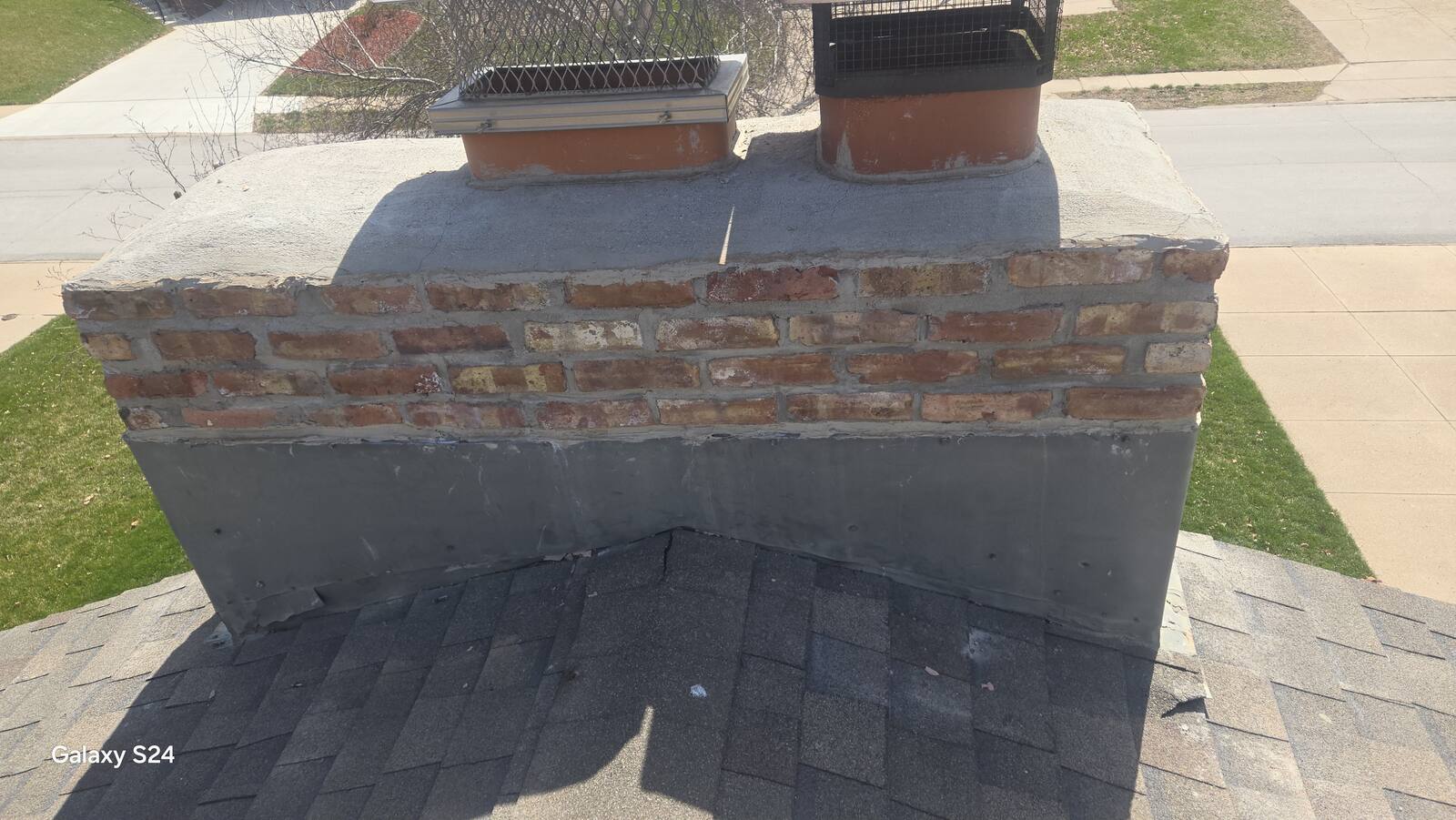
An Omaha chimney goes through dozens of freeze-thaw cycles every winter, and each one pries a little harder at its mortar, brick, and crown. That is why chimneys fail years before the walls below them, and why the top of the stack always goes first. Catching the damage at the crown-and-joints stage keeps the fix small; ignoring it turns repair into rebuild.
Here is how the damage actually happens, what to look for from the ground, and how to decide between repair and rebuild.
Why chimneys take the worst of a Nebraska winter
Masonry survives water or freezing on their own just fine. It is the combination that does damage. Water works into small cracks and open joints, then expands roughly nine percent as it freezes, wedging every gap a little wider. Thaw, refill, refreeze. Eastern Nebraska hands a chimney that cycle over and over between November and March.
A chimney gets a triple dose of it. It has four faces exposed to wind-driven rain and snow instead of one. It has a flat top that holds standing water. And when you use the fireplace, warmth from the flue keeps thawing the stack from the inside so it can refreeze overnight. No other masonry on the house works that hard.
The crown is where it starts
The crown is the concrete cap that sheds water off the top of the stack, and it is the most important few inches of the whole chimney. A proper crown is cast thick, slopes away from the flue, and overhangs the brick with a drip edge so water falls clear of the faces.
Many metro chimneys never got that. They were finished with a thin trowel of mortar instead, which cracks within a few years. Once the crown cracks, water pours straight into the top courses of brick, and freeze-thaw goes to work from the inside. The top of the chimney loosens first, which is exactly the pattern we see on chimney repair calls across the metro, from older Omaha neighborhoods to the 1980s fireplaces of Millard.
Warning signs you can spot from the ground
You do not need to get on the roof to catch chimney trouble early. Look for these from the yard, ideally with binoculars.
- Spalled brick: faces flaking off, or brick chips on the roof or in the gutters. Water is inside the brick.
- White staining: chalky streaks called efflorescence, left where water moves through the masonry and evaporates.
- Open joints: shadow lines or visible gaps in the mortar, especially near the top courses.
- Crown cracks: visible splits in the cap, or vegetation growing up there, which means water is pooling.
- Interior clues: water stains on the ceiling near the fireplace, or a damp smell in the firebox after rain. That often traces to failed flashing rather than the flue.
- A lean or a gap: if the stack looks off plumb or a top course has shifted, stop using the fireplace and get it looked at.
Repair or rebuild: how the call gets made
The decision comes down to how far the water got before it was stopped.
When repair is the right answer
If the brick is mostly sound and the damage lives in the joints and crown, the chimney can be restored: recast or seal the crown, repoint the open joints with matched mortar, replace the scattered spalled units, and reseal the flashing. Done before the damage spreads, this resets the chimney for many winters at a fraction of rebuild cost.
When rebuild is the honest answer
Once brick faces are widely spalled or the top courses are loose enough to move by hand, repointing is lipstick. The failed section needs to come down to sound masonry and be rebuilt, finished with a real crown so the new work outlasts the old. A partial rebuild of the top few feet is common; full rebuilds are for stacks that were neglected for decades.
A contractor should be able to show you which side of that line your chimney is on, in photos you can see for yourself. That kind of masonry repair diagnosis is the difference between paying for what the chimney needs and paying for what a salesman needs.
Timing matters more than most repairs
Chimney work is seasonal in Nebraska. Mortar wants warmth to cure, so the working window runs roughly spring through fall. More importantly, damage compounds over winter: a crown crack that would have been a simple seal in October becomes loose top courses by April. If you spotted any of the warning signs this year, the cheapest version of the fix is the one that happens before the next hard freeze.
Frequently Asked Questions
How often should a chimney be inspected in Omaha?
Give it a good look from the ground every spring after the freeze-thaw season ends, and have a professional eye on it every few years, or immediately if you spot spalling, staining, or crown cracks. Chimneys used heavily for wood fires deserve more frequent attention than decorative ones.
What is the white residue on my chimney brick?
Efflorescence: minerals left behind as water travels through masonry and evaporates at the surface. It wipes off, but it is a message, not a stain. Water is moving through your chimney, usually through a cracked crown or open joints, and the entry point should be found and fixed.
Why is only the top of my chimney damaged?
The top holds the most water and weathers from all four sides, and a failed crown feeds water directly into the upper courses. Freeze-thaw damage concentrates exactly there, which is why partial top-end rebuilds are the most common major chimney repair.
Can chimney repairs be done in winter?
Limited work is possible with cold-weather protection, but mortar cures poorly in freezing temperatures and quality suffers. The practical approach is securing anything unsafe immediately and scheduling the full repair for the warm season, ideally before the damage sees another winter.
Does a leaking chimney mean the flue is bad?
Not usually. Most chimney leaks come from failed flashing where the chimney meets the roof, or from a cracked crown, not from the flue liner. Tracing the actual water path first keeps you from paying for repairs the chimney did not need.
If your chimney is showing its age, get ahead of the next freeze. Request a free estimate or call Omaha Masonry at 402-704-4894. We will look it over, show you what we find, and give you an honest answer on repair versus rebuild.