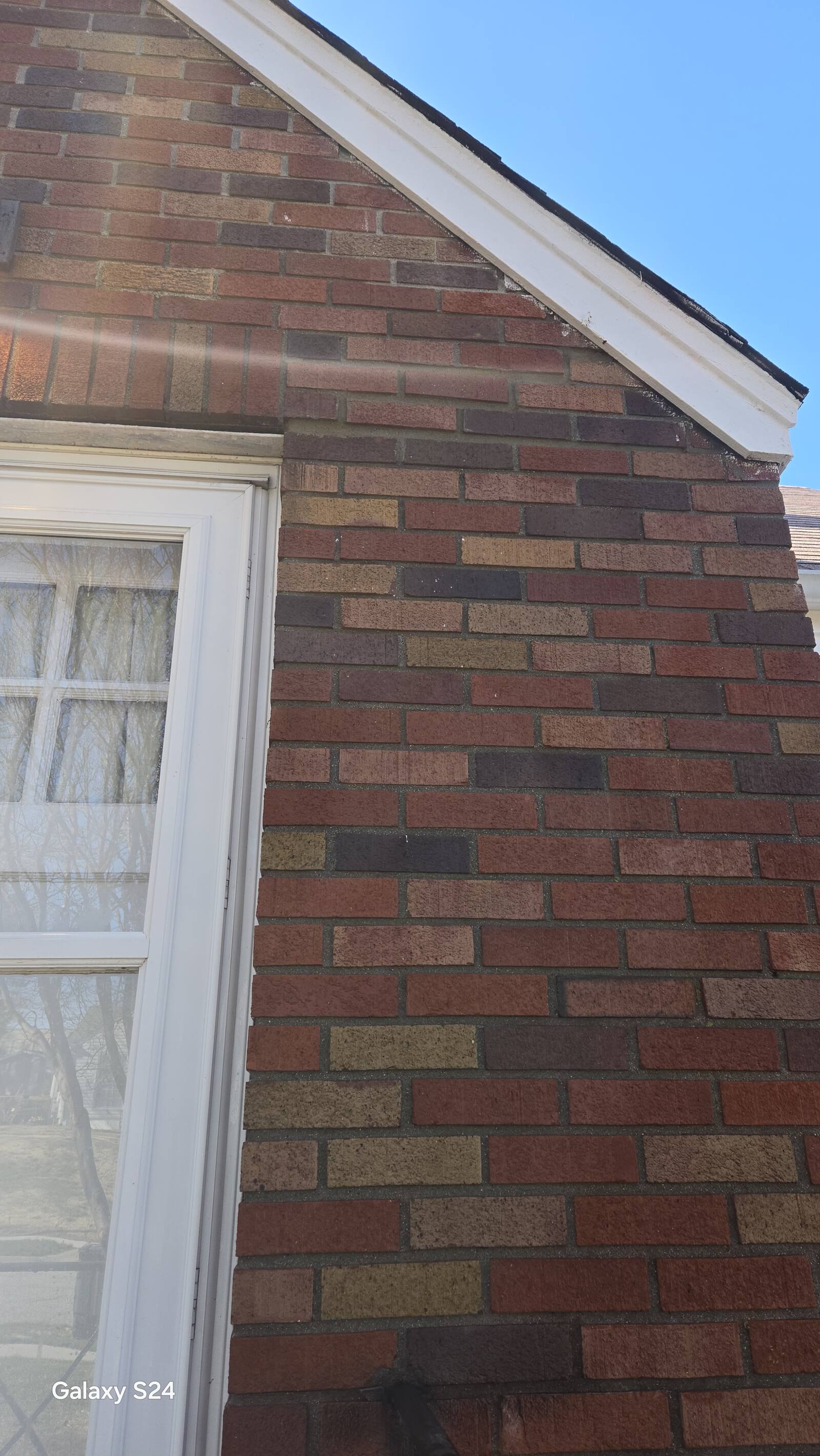
Freshly repointed mortar joints on an Omaha brick wall
Services

Tuckpointing in Omaha, NE

Mortar is the part of your wall that is designed to wear out. When joints crack, powder, or fall out in chunks, repointing restores the wall's weather seal for decades, at a fraction of the cost of rebuilding.

Run a key along a mortar joint on your house. If it powders out, flakes, or shows gaps where mortar used to be, the wall is telling you it is due. Mortar is sacrificial by design: it is meant to wear before the brick does, and it is meant to be renewed. That renewal is tuckpointing, and it is some of the highest-value maintenance a brick home can get.

Around Omaha you will hear tuckpointing, repointing, and joint repair used interchangeably, and for practical purposes they mean the same thing: grinding the failed mortar out of the joints to sound depth, then packing fresh mortar in and tooling it to match. The words matter less than the depth, the mix, and the match, which is where most cheap tuckpointing jobs go wrong.

Omaha Masonry repoints everything from a single weathered chimney to whole elevations of century-old brick. Joints get cut to proper depth, mortar gets matched in color and, just as important, in hardness, and the finished joint gets tooled to the profile of the original work, so the wall looks maintained rather than patched.

Why mortar hardness matters more than color

Everyone notices when new mortar is the wrong color. The mistake that actually destroys walls is invisible on day one: mortar that is too hard. Older Omaha brick was laid in softer lime-based mortar that flexes with the wall and lets moisture escape through the joint. Repoint that brick with hard modern mortar and the stress transfers into the brick itself, and the brick faces, not the joints, start popping off a few winters later.

We match the mortar to the wall: softer lime-rich mixes for older brick, modern mixes where the brick calls for it, and color blended to the aged original rather than to a fresh bag. It is the difference between a repair that protects the wall and one that quietly eats it.

Depth is the other half. Skim-coating fresh mortar over failed joints looks fine for a season and falls out with the first freeze. Joints have to be cut back to sound mortar for the new material to bond, and that is where the labor in a proper job actually goes.

Signs your joints are due for tuckpointing

  • Mortar that powders or crumbles when you rub it with a finger or key
  • Cracks running along the joints, or joints with visible gaps and shadows
  • Chunks of mortar in the flower bed or on the driveway after storms
  • Daylight or drafts finding their way through a wall or chimney
  • Water stains inside near a chimney or an exterior brick wall
  • A previous skim-coat repair that is flaking off in sheets
Our process

How we repoint a wall

1

Assess the joints

We check joint depth, mortar hardness, and how far the failure runs, and identify any brick damage hiding behind it.

2

Cut to sound depth

Failed mortar is ground and raked out to solid material, with brick edges protected and dust controlled.

3

Match the mortar

Color blended to the aged original and hardness matched to the brick: softer lime mixes on older walls, modern mixes where appropriate.

4

Pack and tool

Joints are packed full in lifts, then tooled to the original profile, so the finished wall reads as one piece of work.

Tuckpointing in Omaha's climate

Freeze-thaw is what kills mortar here. Every winter, water in a soft joint freezes, expands, and wedges the joint open a little more, which is why joints that looked fine five years ago can suddenly look ragged. South and west faces take the worst of it, along with chimneys and parapets that catch weather from every side.

The economics are simple: repointing costs a fraction of what brick replacement does, and sound joints are what keep water away from the brick. On Omaha's older housing stock, timely tuckpointing is often the difference between a wall that lasts another century and one that needs sections rebuilt in a decade.

Where we do it

Tuckpointing near you

Questions

Tuckpointing FAQs

What is the difference between tuckpointing and repointing?

Around Omaha the terms get used interchangeably, and both mean removing failed mortar and installing fresh mortar in the joints. Strictly speaking, tuckpointing is a decorative two-tone version of the craft, but what nearly every home here needs is repointing, and that is what we quote.

How do I know if my house needs it?

Rub a joint with a key. If mortar powders out, if joints show cracks or gaps, or if chunks are ending up in the landscaping, the wall is due. Catching it at that stage protects the brick, which is the expensive part of the wall.

Will the new mortar match the old?

Yes, that is the craft. We blend color to the aged original rather than to a fresh bag, match the joint profile, and match the mortar's hardness to your brick, which matters more for the wall's health than the color does.

Can you repoint just my chimney?

Absolutely. Chimneys catch the worst weather on the house and are usually the first thing to need repointing. Single-chimney and single-wall jobs are routine for us, and they are a smart way to stop water damage early.

Why did my last tuckpointing job fail so fast?

Almost always one of two shortcuts: mortar skimmed over failed joints instead of cut to sound depth, or mortar too hard for the brick. Both look fine at first and fail within a few seasons. We cut to depth and match the mix, which is why our joints stay put.

How long does tuckpointing last?

Done to proper depth with matched mortar, repointed joints commonly last several decades. The exact life depends on the wall's exposure, but you should not be thinking about those joints again for a very long time.

How much does tuckpointing cost?

It depends on the square footage of wall, the height, and how deep the failure runs, so we quote after seeing it. Estimates are free, and repointing early is always cheaper than replacing spalled brick later.

Ready to get it fixed right?

Tell us what is going on with your brick, stone, or chimney. We will take a look, explain the cause in plain language, and give you a free written estimate.