Services
Historic Masonry Restoration in Omaha
Omaha's older buildings were built by hand, in brick and stone worth keeping. We restore them with matched materials and methods instead of modern shortcuts that do more harm than good.
Omaha's older buildings were built by hand, in brick and stone worth keeping. We restore them with matched materials and methods instead of modern shortcuts that do more harm than good.
Omaha has real architectural history: the warehouses of the Old Market, the brick storefronts along the older commercial streets, the early 1900s homes of Dundee, Field Club, and Bemis Park, and the carved stone details on buildings downtown. Keeping those structures standing is a different discipline from modern masonry work.
The difference comes down to materials. A century-old wall was laid in soft, lime-rich mortar with brick fired softer than anything made today. Repair it with hard modern mortar and the wall stops flexing at the joints and starts breaking at the brick, which is how well-meaning repairs destroy historic faces. Restoration means matching what the original builders used.
Omaha Masonry does restoration work on older homes and commercial buildings across the metro: repointing with appropriate mortar, matched brick replacement, stone repair, and the patient detail work that lets a building keep its character instead of losing it one repair at a time.
Joints raked and repointed with lime-appropriate mortar matched in color, texture, and hardness to the original.
Deteriorated units replaced with reclaimed or compatible brick, placed to blend with the aged wall.
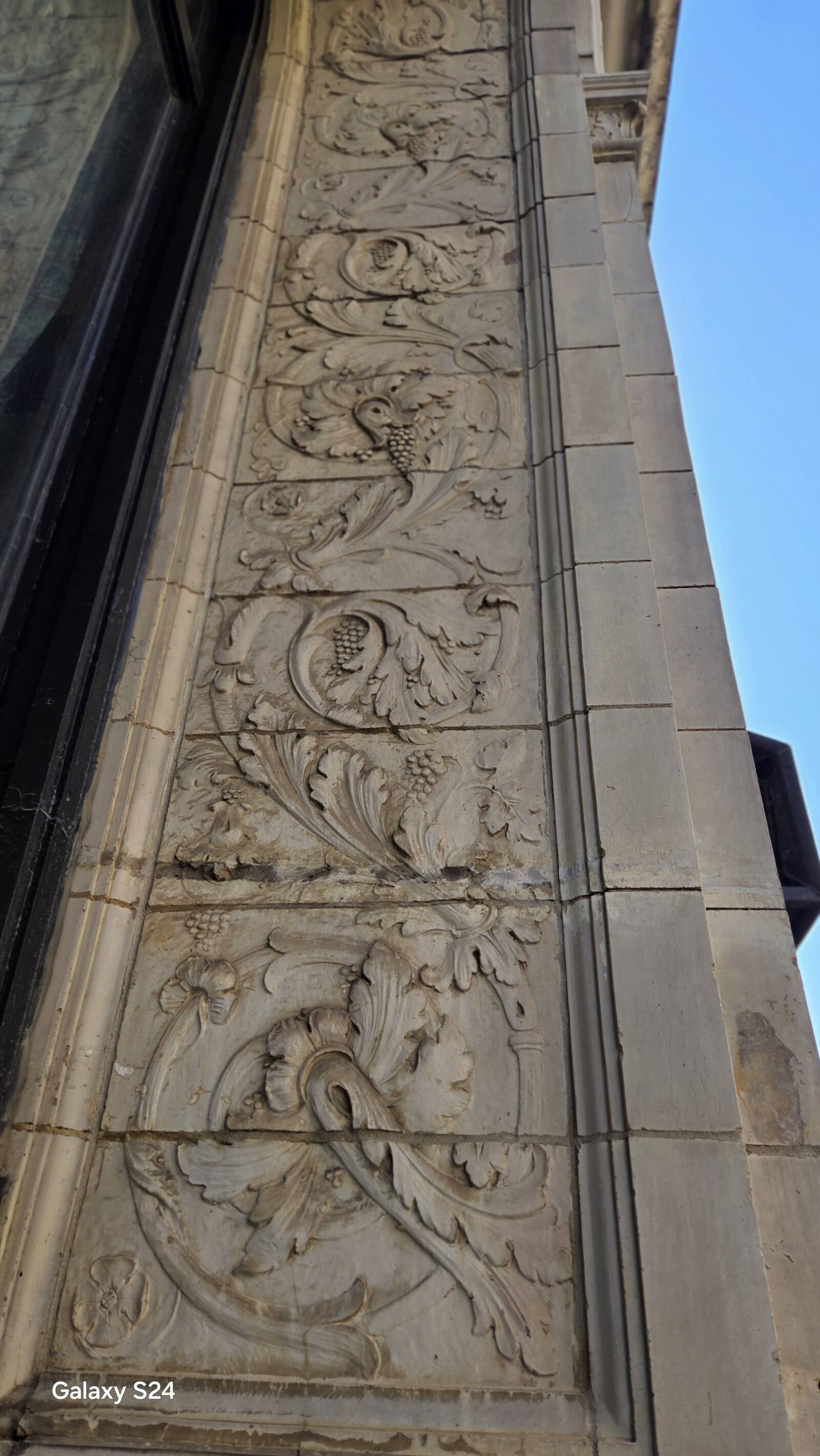
Sills, lintels, caps, and carved details repaired, patched, or replaced in kind.
Storefronts and building faces brought back section by section, keeping the original detail work intact.
Original chimneys on older homes rebuilt to their historic profile instead of capped with something generic.
Gentle, appropriate cleaning methods. No aggressive blasting that strips the fired face off old brick.
Mortar joints, brick coursing, and detail profiles get recorded before anything is touched, so the restored work matches the original.
Mortar is blended and tested against the original for color and hardness. Brick and stone are sourced to match size, texture, and tone.
Original methods where they matter: hand raking joints, matching tooling profiles, replacing units rather than skimming over them.
Finished work is blended into the surrounding wall and detailed to shed water, so the restoration protects the building instead of just decorating it.
Much of our restoration work happens in Omaha's early streetcar neighborhoods and commercial districts, where brick was the default and the craftsmanship was real. Those walls have survived a century of Nebraska winters, which says everything about how well they were built. They fail when water finds a way in, or when a past repair used the wrong materials.
If you own an older brick home or building, the two best things you can do for it are keeping water managed, through sound gutters, caps, and flashing, and insisting that any masonry repair use compatible mortar. We are glad to walk a building with you, explain what it needs now versus what can wait, and put together a scope that respects both the structure and your budget.
Historic walls were laid in soft lime mortar that flexes and lets moisture escape through the joints. Hard modern mortar traps that stress and moisture in the brick, which then spalls and crumbles. Matching mortar hardness is the single most important rule in restoration.
Usually, yes. We source reclaimed brick from the same era and region where possible, and blend compatible new units where it is not. Placement matters as much as the unit itself, and we lay replacements where they read naturally in the wall.
It is more labor-intensive because matching and hand work take time, but it protects the value of the building. Cheap incompatible repairs cost more in the long run because they damage original material that cannot be replaced.
Yes. Facade and storefront restoration can be phased and scheduled around your business hours, and we keep the site clean and safe throughout.
Usually. We rebuild older chimneys to their original profile with matched brick and a properly cast crown, which both looks right and sheds water better than a flat cap.
Start with a walk-through. We will look at the building together, identify what is urgent versus cosmetic, and give you a free estimate with a phased scope if the project is large.
New brickwork that blends with what is already there: columns, steps, planters, and walls, matched by hand and laid to last.
Learn moreNebraska freeze-thaw is hard on chimneys. We repair, rebuild, and restore them from the flashing up.
Learn moreCracked walls, loose brick and stone, crumbling mortar joints. We diagnose the cause and repair it so it stays repaired.
Learn moreTell us what is going on with your brick, stone, or chimney. We will take a look, explain the cause in plain language, and give you a free written estimate.