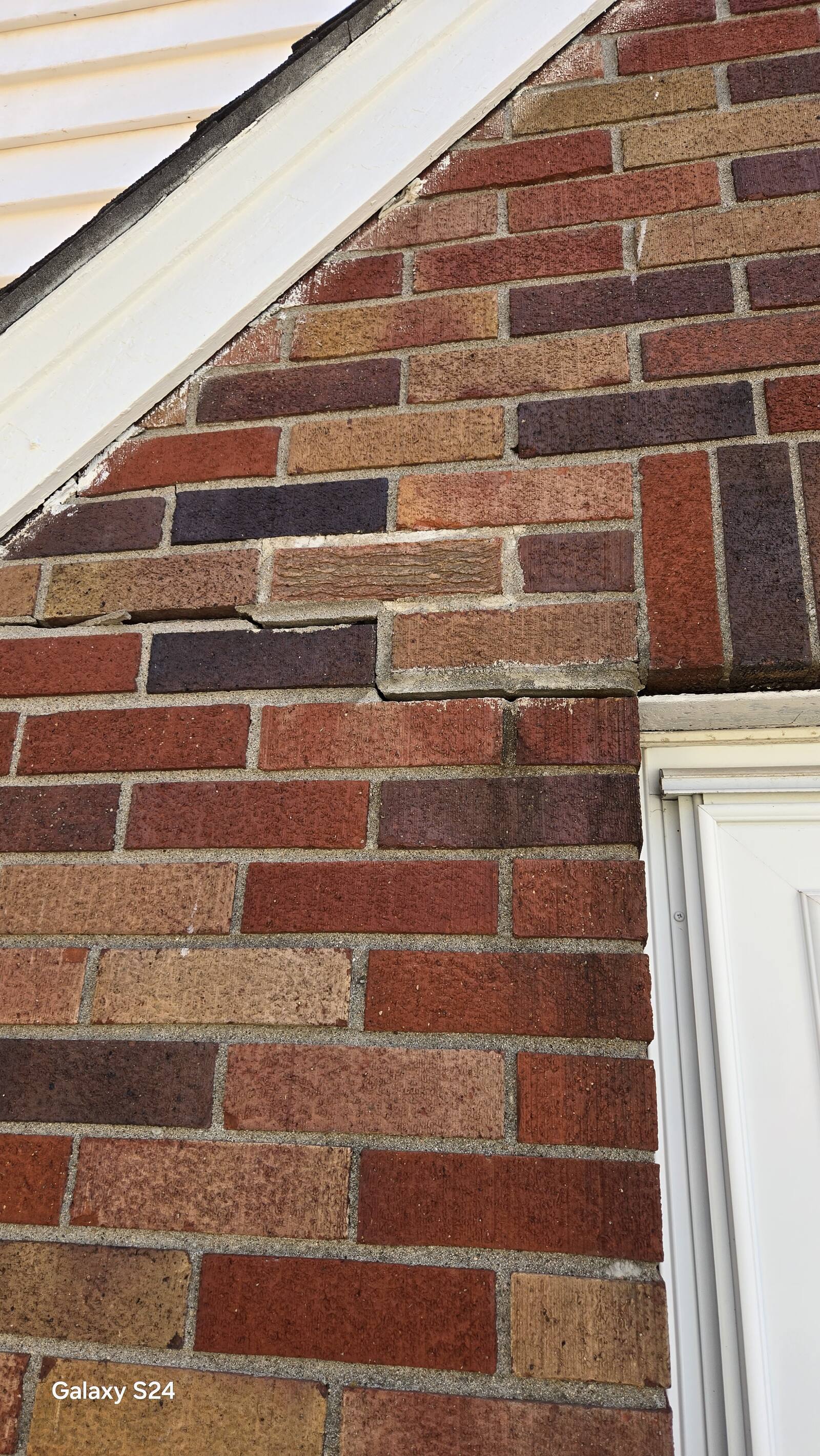
Brick needs tuckpointing when the mortar joints start failing before the brick does: mortar that powders when you rub it, cracks running along the joints, visible gaps where mortar used to be, or chunks of it showing up in the flower bed after a storm. If you can scratch a joint out with a house key, the wall is telling you it is due. In Omaha, most brick homes reach that point somewhere between every few decades on sheltered walls and much sooner on chimneys and weather-facing sides.
Mortar is supposed to wear out
A brick wall is really two materials with two different jobs. The brick carries the load and takes the weather on its face. The mortar holds everything in line, seals the wall against water, and, importantly, wears out first on purpose. Mortar is the sacrificial part of the system. It is softer than the brick by design, so that decades of movement and moisture spend themselves on the joints instead of on the brick itself.
That design only works if the worn mortar actually gets renewed. Tuckpointing, which around Omaha gets used interchangeably with repointing, is that renewal: the failed mortar is ground out of the joints to sound depth, fresh mortar matched to the original goes in, and the joints are tooled to the same profile as the rest of the wall. Done properly, it resets the clock on the wall for decades.
Skip it long enough and the failure moves from the cheap part of the wall to the expensive part. Open joints let water reach the brick, water freezes, and the brick faces start popping off. At that point the wall does not need joint work anymore, it needs brick repair, and replacing brick costs far more than repointing joints ever would have.
The signs your joints are due
You do not need a ladder or any special tools to check your own house. Walk the walls you can reach and look for these:
- Powdering mortar. Rub a joint with your finger or a key. Sound mortar feels like stone. Failing mortar dusts, flakes, or scratches out in crumbs.
- Cracks along the joints. Thin lines running through the mortar bed are water highways. They widen a little every winter.
- Gaps and shadows. Joints that look recessed or show dark shadow lines have already lost material. On a low sun angle these stand out clearly.
- Mortar debris on the ground. Chunks in the landscaping or on the driveway after wind or rain mean joints are actively letting go.
- Drafts or daylight. In garages and attics, light or airflow through a brick wall means joints have failed all the way through.
- Interior water stains. Stains near a chimney or on plaster behind an exterior brick wall often trace back to open joints outside.
One more that homeowners rarely connect: white, chalky staining on the brick, called efflorescence. It is mineral residue left behind by water moving through the wall. The staining itself is cosmetic, but it is proof that water is traveling where it should not be, and failed joints are the most common door it uses.
Why Omaha is hard on mortar joints
Two local facts shorten the life of mortar here. The first is freeze-thaw cycling. An Omaha winter can swing across the freezing line dozens of times, and every swing turns any water sitting in a soft joint into a wedge. The water freezes, expands, and pries the joint open slightly wider, which lets in more water for the next cycle. This is why a wall can look fine for years and then seem to fail all at once over two or three hard winters.
The second is our expansive clay soil. Omaha's clay swells when it is wet and shrinks when it is dry, and that seasonal movement telegraphs up through foundations into brick walls. Moving walls flex at their weakest point, which is always the mortar, so joints here take mechanical stress on top of the weather.
Exposure matters too. South and west faces take the most sun and the most weather, so they usually fail first. Chimneys are the worst case on the whole house: they catch weather from all four sides, they run hot and cold from use, and their joints sit up where nobody looks at them. Chimneys often need repointing a decade before the rest of the house, and letting it wait is how chimney repair jobs turn into chimney rebuilds.
Older Omaha brick has one extra rule
If your home is in an older neighborhood like Dundee, Benson, or Field Club, the mortar in your walls is probably a softer, lime-based mix, and that changes what a proper tuckpointing job looks like. Old soft brick was laid in soft mortar on purpose, so the joints could flex and breathe. Repointing those walls with hard modern mortar looks fine the day it is finished, but it traps stress and moisture in the brick itself, and a few winters later the brick faces start shearing off.
This is the single most common way well-meaning tuckpointing ruins a historic wall. The fix is simply matching the mortar's hardness to the brick, not just its color. Softer lime-rich mixes belong on older walls, modern mixes on modern brick. It is a detail worth asking any contractor about directly, and if the answer is a blank look, keep calling around.
What a proper tuckpointing job involves
The difference between repointing that lasts decades and repointing that fails in a couple of seasons comes down to two shortcuts, both invisible on the day the job is finished.
- Depth. Failed mortar has to be cut or ground out to sound material before new mortar goes in. Smearing fresh mortar over the face of a bad joint, sometimes called a skim coat, bonds to nothing and falls out with the first freeze.
- Match. The new mortar needs to match the old in color, in joint profile, and in hardness. Color so the wall reads as one piece of work, profile so the repair disappears, and hardness so the wall keeps behaving the way it was built to.
A crew doing it right will assess the joints and the brick first, grind to depth with the brick edges protected, mix mortar matched to the original rather than straight from the bag, pack the joints full in lifts, and tool them to the existing profile. On most houses that is a matter of days, not weeks, and it is quiet, contained work.
What it saves you
Tuckpointing is one of the least expensive things you can do to a brick wall, and it protects the most expensive part. Sound joints keep water off the brick, and that is what decides whether a wall lasts another generation or needs sections rebuilt. Every winter a failed joint stays open, the repair scope grows, first along the joints, then into the brick.
If you are seeing powdery joints or mortar on the ground now, late summer and fall are the ideal windows to repoint in Omaha, so the new mortar cures well before the freeze-thaw season starts working on it.
Frequently Asked Questions
How often does brick need tuckpointing?
There is no fixed schedule, because exposure drives it. Sheltered walls can go many decades, while chimneys and south or west faces fail years earlier. Judge by condition, not age: powdering, cracks, gaps, or debris on the ground mean the wall is due regardless of the calendar.
Is tuckpointing the same as repointing?
In everyday Omaha usage, yes. Both refer to removing failed mortar and installing fresh mortar in the joints. Strictly speaking, tuckpointing is a decorative two-tone version of the craft, but what nearly every home actually needs is repointing, and that is what contractors here mean when they quote it.
Can I tuckpoint my house myself?
Small, low sections are within reach of a patient homeowner, but the two things that make the job last, cutting joints to sound depth without chewing the brick edges and matching the mortar mix to the wall, are exactly the parts that go wrong in DIY attempts. Mistakes here are not cosmetic, they shorten the wall's life.
What happens if I put off tuckpointing?
Open joints let water into the wall, and freeze-thaw cycles turn that water into a demolition tool. The damage moves from mortar to brick, showing up as spalled faces and loose units. At that stage the fix is brick replacement, which is a much larger job than repointing the joints would have been.
Why did my last tuckpointing job fail so quickly?
Almost always one of two shortcuts: new mortar skimmed over failed joints instead of cut to sound depth, or mortar that is too hard for the brick. Both look fine at first and fail within a few seasons. A proper job cuts to depth and matches the mix, which is why it lasts decades.
Do you check the rest of the wall while repointing?
A good crew does. Joint failure and brick damage travel together, so the assessment should cover spalled faces, loose units, cracks that suggest movement, and the condition of sills and caps above the wall. Fixing the water path and the joints together is what makes the repair permanent.
Not sure whether your walls are at the maintenance stage or past it? Omaha Masonry looks at brick all over the metro every week, and telling you honestly which side of that line you are on costs nothing. Request a free estimate or call or text 402-704-4894, and we will walk the wall with you.