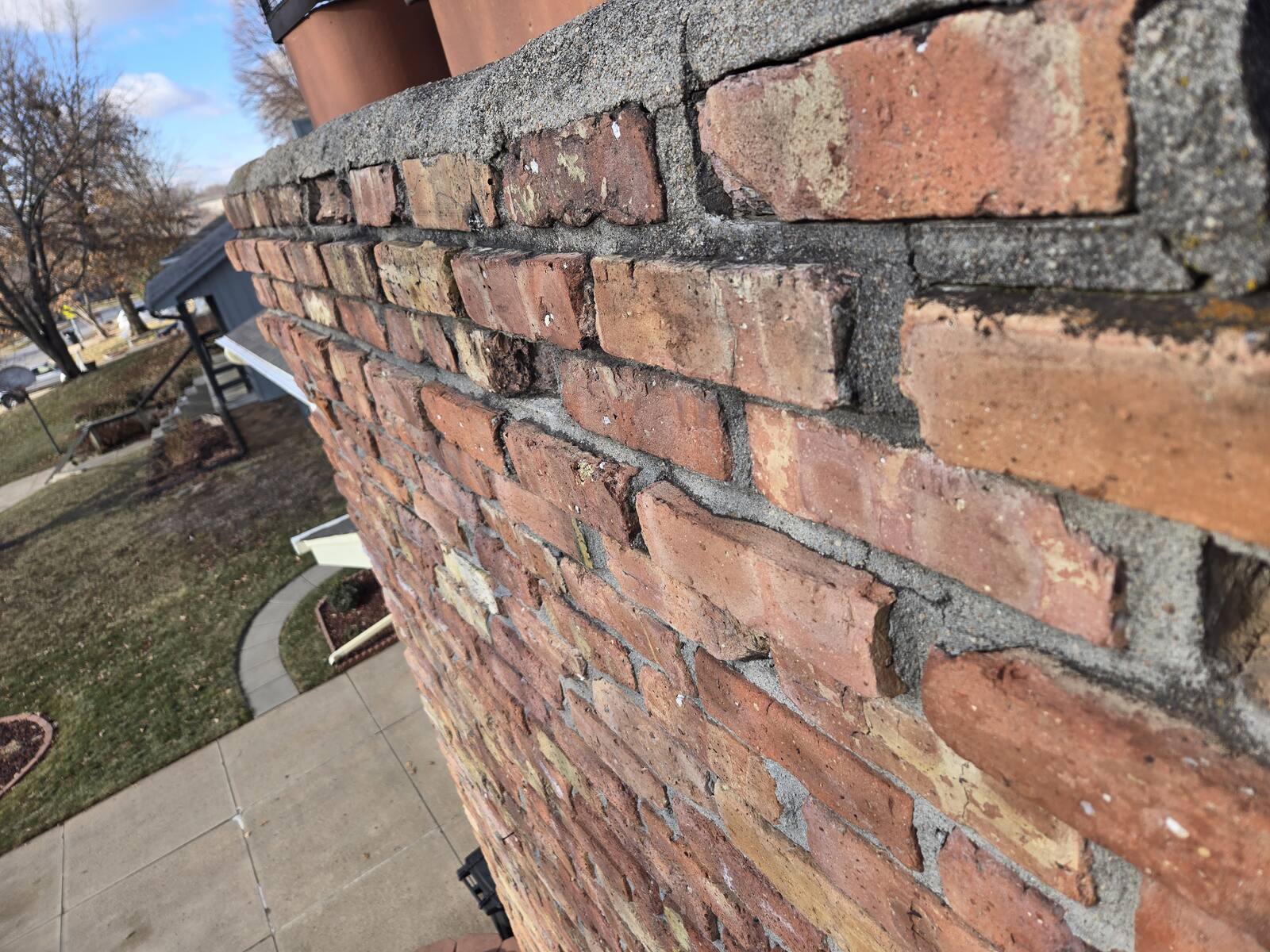
If stones are falling off the front of your newer Omaha area home, the cause is almost always the same: the manufactured stone veneer was installed without the lath, plaster scratch coat, and moisture barrier it requires behind it. The stone was effectively glued to the wall, and Nebraska's freeze-thaw winters eventually pull it off. The fix is rebuilding that backing correctly, not gluing stones back on.
That is the short answer. Here is what is actually happening behind your facade, why the problem is so common in Elkhorn, Gretna, and Bennington specifically, and what a repair that lasts looks like.
What manufactured stone veneer actually is
The stone on most homes built in the metro over the last two decades is not quarried rock. It is manufactured stone veneer, sometimes called cultured stone: concrete cast in molds and colored to look like natural stone. It weighs less than full-bed stone, installs faster, and costs less, which is why builders love it.
There is nothing wrong with the product itself. Installed to the manufacturer's specifications, it lasts for decades. The specification is the catch. Behind every stone there is supposed to be a water-resistive barrier, metal lath fastened through the sheathing, and a mortar scratch coat that the stones are set into. That layered system is what actually carries the stone and manages the water that gets behind it.
Why the stones let go
During the building booms that filled out the western suburbs, a lot of veneer went up fast. On the homes we repair, we routinely find missing lath, skipped scratch coats, no moisture barrier, or stones stuck to bare sheathing with dabs of mortar. From the street it all looks identical to a correct install. The wall itself knows the difference.
Water is what exposes it. Rain and snowmelt work behind the stone, and eastern Nebraska gives us dozens of freeze-thaw cycles every winter. Each freeze expands that trapped moisture and pries at the bond. The lowest courses, around porches, columns, and the grade line, hold the most moisture, so they fail first. That is why the classic first symptom is a stone or two sitting in the landscaping rock below the porch.
It also explains why the problem is a neighborhood pattern rather than bad luck. Subdivisions share builders, and builders share installers. When one house on a street has stones letting go, several usually do. We see the same failure repeating across Elkhorn, Gretna, and Bennington, in neighborhoods built within a few years of each other.
Why gluing the stones back never works
The instinct is understandable: the stone fell off clean, so stick it back on. Construction adhesive, a smear of mortar, a caulk bead. It even looks fine for a while.
The problem is that the patch fixes the symptom and preserves the cause. The stone failed because nothing behind it was holding it and water had a path to the bond line. A glued stone has even less holding it, and the same water path. It usually lets go within a few seasons, often taking neighbors with it, because the failure zone behind the wall has kept spreading. We regularly repair walls where the glued patch outlined exactly how long the problem had been ignored.
What a correct stone veneer repair involves
A repair that lasts rebuilds the wall system the installer skipped. On our stone veneer repair jobs, that means five steps.
1. Inspect beyond the obvious damage
Loose stones are the visible edge of the failure, not the extent of it. We check how far the bond has broken, whether sheathing behind the wall has taken water damage, and where the failure will spread next if nothing changes.
2. Remove the failed section cleanly
The repair area gets stripped back to stone that is genuinely sound, so the new work ties into a solid edge instead of a failing one.
3. Rebuild the backing
Moisture barrier, metal lath fastened properly, and a full scratch coat. This is the actual repair. Everything else is finish work.
4. Reset and blend the stone
We reuse your original stones wherever possible and blend in matched replacements where stones broke or went missing. Color matching matters here, because veneer tones vary by product line and by years of sun, and a mismatched patch is visible from the street forever.
5. Detail the water paths
Joints, sills, and transitions get finished so water sheds instead of collecting. The reason the wall failed was water; the reason the repair lasts is water management.
What it means for your home's value
Beyond looks, unrepaired veneer failure reads as a red flag in a home sale. Inspectors note it, buyers ask about it, and a facade with missing stones invites bigger questions about what else was rushed. A documented, correct repair closes that conversation. If you are planning to sell a western suburbs home in the next few years, this is one of the more visible fixes you can make.
Frequently Asked Questions
Why are stones falling off my house after only a few years?
Because the veneer was installed without the backing system it needs: moisture barrier, metal lath, and a scratch coat. Without them the stone is held by surface bond alone, and freeze-thaw winters break that bond, starting near porches and ground level where moisture sits.
Is falling stone veneer a structural problem?
The veneer itself is not structural, so your house is not in danger. The real risks are water reaching the sheathing behind the failed area, falling stones around walkways, and the failure spreading along the wall each winter. All three get worse with time, which is why early repair is the cheap repair.
Can I repair stone veneer myself?
Re-sticking a stone is easy; making it stay is not. A lasting repair means rebuilding lath, scratch coat, and moisture detailing behind the failed section, then blending stone colors so the patch disappears. If you want it done once, have someone who knows the system do it.
How long does a professional repair take?
Most porch and facade repairs run one to two days once scheduled. Larger failures that involve rebuilding backing across a full elevation take longer. You should get a clear scope and timeline with your estimate before any work starts.
Will insurance cover stone veneer repair?
Usually not for installation defects, since policies cover sudden damage rather than construction shortcuts. Storm damage can be a different story. Your policy and agent have the real answer, and a written repair estimate helps that conversation either way.
If your porch or facade is shedding stones, do not wait for another winter to grow the repair. Request a free estimate or call Omaha Masonry at 402-704-4894, and we will look at it with you, explain exactly what happened behind the wall, and give you a repair plan that holds.