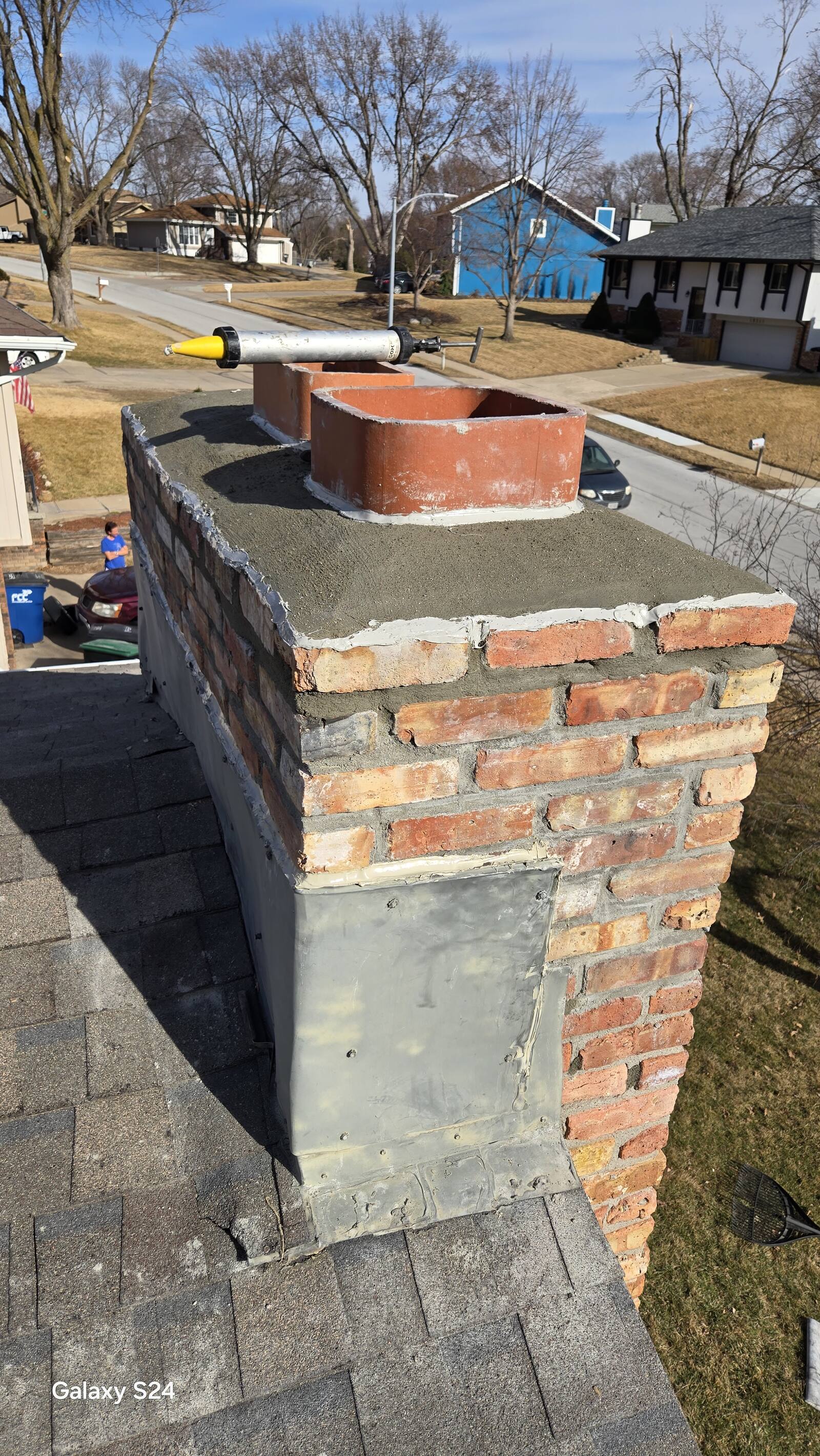
The line between a chimney repair and a chimney rebuild comes down to how far the damage goes below the surface. If the brick and mortar are sound below the roofline and the problem is confined to the crown, the flashing, or the top few courses, it is a repair. Once mortar has failed deep into the stack or the chimney is out of plumb, rebuilding is the honest answer.
Late summer is when we field the most of these calls in Omaha, and there is a good reason for that. Whatever is wrong with a chimney right now is going to be worse after one more winter. Getting ahead of it is the difference between replacing a crown and rebuilding a stack.
What Omaha Winters Actually Do to a Chimney
Brick and mortar are porous. They take on water, and around here that water freezes and thaws repeatedly through the season rather than freezing once and staying frozen. Each cycle expands the moisture trapped inside the masonry and pushes it apart from within.
A chimney is more exposed to that than any other masonry on the house. It stands above the roofline with weather hitting it from every direction, it has no heated interior to dry it out once the fireplace goes unused, and it collects runoff at the crown. That is why chimneys age faster than the walls below them, even when the same mason built both.
The Damage Pattern We See Most
It usually starts at the top. The crown, the concrete cap covering the top of the masonry, develops hairline cracks. Water gets past it and into the body of the chimney. From there it works down through the mortar joints, freezing and thawing all winter, until joints crumble and brick faces begin to break off. By the time a homeowner notices brick chips in the yard, water has often been inside the stack for years.
Signs the Chimney Is Still Repairable
Plenty of chimneys that look rough are perfectly good candidates for targeted repair. These are the conditions we can usually address without taking the stack down.
A Cracked or Failing Crown
A crown is meant to shed water away from the masonry, and it wears out well before the brick does. A cracked crown on an otherwise solid chimney is a straightforward fix and one of the highest value repairs available, because it stops the water at the source.
Deteriorated Mortar Joints in the Upper Courses
When mortar has receded or gone soft but the brick itself is intact, repointing restores the joints. The work has to be done with mortar matched to the existing masonry, which matters more on older Omaha homes than on newer construction. Our tuckpointing work covers exactly this situation.
Failed Flashing at the Roofline
Flashing is the metal that seals where the chimney passes through the roof. A leak at the ceiling near the fireplace is often flashing rather than masonry. It is worth ruling out before anyone starts talking about a rebuild.
Scattered Spalling on a Sound Stack
Spalling is brick faces flaking or popping off after water froze inside them. A handful of spalled brick on a stack that is otherwise plumb and tight can be cut out and replaced with matched units. It becomes a different conversation when the spalling is widespread.
Signs It Needs a Rebuild
Some chimneys are past the point where patching is honest work. Repairing these only sells the homeowner a delay.
The Stack Is Leaning or Out of Plumb
A chimney that is visibly tilting has either lost structural integrity in the masonry or has a footing problem below. Omaha's expansive clay soil moves with moisture, and a chimney footing that has shifted will keep shifting. Neither one is fixed by new mortar at the top.
Mortar Has Failed Through the Full Depth of the Joint
Repointing replaces the outer portion of a mortar joint. If you can push a screwdriver deep into a joint or the mortar comes out as sand, there is nothing left for new mortar to bond to. At that point the stack is being held up by the weight of the brick above it.
Widespread Spalling Across Multiple Courses
When most of the brick faces on a section have broken off, replacing them individually costs more labor than rebuilding that section and leaves a patchwork appearance. We are candid about where that line falls.
The Chimney Has Separated From the House
A visible gap opening between the chimney and the siding or wall is a structural signal, not a cosmetic one. It typically points to foundation or footing movement and needs to be evaluated before any masonry work is planned.
Partial Rebuilds Are Often the Right Middle Ground
The choice is not always all or nothing. A very common outcome on Omaha homes is a rebuild from the roofline up, where the exposed portion of the chimney is taken down and rebuilt while the sound masonry below stays in place. That addresses the part of the stack that takes the weather without the cost and disruption of a full teardown.
Which approach fits depends on what an in person look reveals. Photos help, but the condition of the mortar and whether the stack is plumb are things we need to check directly. That assessment is part of how we approach chimney repair across the Omaha metro.
Why Timing Before Winter Matters
Masonry needs reasonable temperatures to cure properly. Mortar placed in freezing conditions does not gain strength the way it should, which is why quality masonry work slows down considerably once the cold sets in. Waiting until you see a real problem in January means either waiting until spring or accepting compromised work.
There is a second cost to waiting. Every freeze and thaw between now and spring drives more water deeper into a chimney that is already letting it in. A crown repair that would have solved the problem this fall can turn into a partial rebuild by the following summer. The damage does not hold still over the winter.
Who We Are
Omaha Masonry is an owner operated shop with decades of hands on masonry experience, and we were recognized by the Omaha World-Herald for Best Concrete, Masonry & Brick Installation. We work throughout Omaha, Bellevue, La Vista, Papillion, Millard, Ralston, Elkhorn, Gretna, and Bennington, on everything from chimneys to general masonry repair and full restorations.
Frequently Asked Questions
How do I know if my chimney needs attention at all?
Look for brick or mortar debris at the base of the chimney, visible cracks in the crown, missing or receded mortar joints, white staining on the brick, rust on the damper, or water stains on the ceiling near the fireplace. Any one of those is worth having looked at before winter.
Can I repair a chimney myself with masonry caulk or patch material?
Surface patching over failed mortar traps moisture behind it and usually accelerates the damage. The same is true of sealants applied over spalled brick. If the underlying joint or crown has failed, the repair needs to remove the failed material rather than cover it.
Does an unused fireplace still need chimney maintenance?
Yes, and unused chimneys often deteriorate faster. Without periodic warmth drying the flue, moisture lingers longer inside the masonry. The structure is still exposed to the same weather whether or not you light a fire in it.
How long does a chimney rebuild take?
A rebuild from the roofline up is generally a matter of days depending on size, access, and weather. Full rebuilds take longer. Mortar also needs curing time afterward, which is one more reason the work belongs in the warmer months.
Will new brick match the rest of my chimney?
On partial repairs we work to match brick and mortar color and texture as closely as available materials allow. Older Omaha homes can be harder to match exactly because the original brick may no longer be produced. We will tell you honestly what the match will look like before we start.
What if the chimney damage is tied to foundation movement?
Then the masonry work should follow the structural fix, not precede it. Rebuilding a chimney on a footing that is still moving means doing the work twice. We will say so if that is what we find.
If your chimney has you wondering which side of the line it falls on, the best time to find out is now, while there is still season left to do the work properly. Get in touch for an assessment and we will take a look, tell you plainly whether it is a repair or a rebuild, and lay out what the work involves.