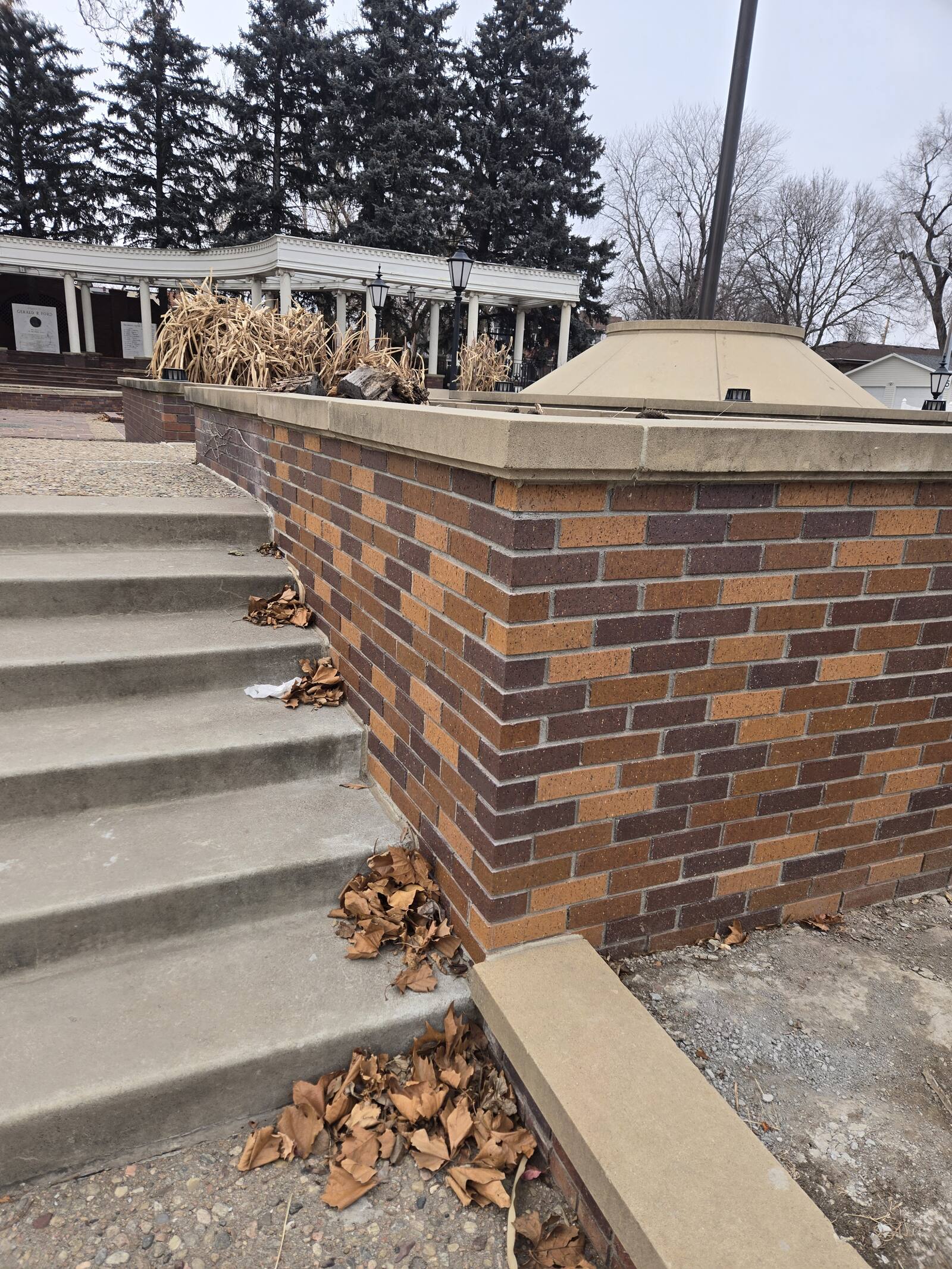
A leaning retaining wall doesn't always mean it needs to come down. In La Vista, where clay-heavy soil expands and contracts with the seasons, we see walls that look alarming but are still structurally sound, and walls that look fine from the sidewalk but are failing underneath. The only way to know which one you're dealing with is to look at how the wall is actually behaving, not just how it looks.
Why La Vista's soil is hard on retaining walls
Clay soil holds water, and water is the reason most retaining walls fail. When clay gets saturated it expands and pushes outward against whatever is holding it back. When it dries out, it contracts and pulls away, leaving gaps that fill with more water the next time it rains. A wall built without enough drainage behind it is fighting that cycle every season, and over years the pressure adds up.
This is true across the Omaha area, but it shows up differently depending on the grade of a property and how water moves across a lot. A La Vista yard with a slope draining toward the wall puts more pressure on it than a flat lot with good runoff elsewhere. That's part of why two walls built the same way, a few streets apart, can be in very different condition today.
The signs we look for that mean "repair"
A wall that's leaning slightly but evenly across its whole length, with no cracking or bulging in specific spots, is often still doing its job. It may just need better drainage added behind it, or a few sections of loose block reset. Small cracks that follow a mortar joint rather than cutting through the block itself are usually a maintenance issue, not a structural one.
Water is the other clue. If you can see where water is escaping the wall, through a weep hole or a gap between blocks, that's actually a good sign. It means the wall has somewhere for pressure to release instead of building up behind the face. A wall with no visible drainage at all is more likely to be holding water it shouldn't be, which is where bigger problems start.
The signs that usually mean "rebuild"
A wall that bulges outward in one section while the rest stays straight is telling you the pressure isn't distributed evenly, which usually means the base has shifted. Cracks that run straight through a block rather than along a mortar joint point to the same thing. And a wall that's leaning more than a few degrees, especially if that lean has visibly changed over the past year or two, has likely lost its structural footing rather than just settled slightly.
Age matters here too. An older wall that was never built with proper drainage or a compacted base is more likely to have reached the point where patching individual sections just delays the same failure happening somewhere else along the same wall. At that point, a full rebuild with the drainage and base done correctly costs less over time than repeated repairs to a wall that was never going to hold long-term.
What a proper rebuild actually fixes
The visible wall is the easy part. What actually determines whether a retaining wall holds is what's behind it: a compacted base, gravel backfill that lets water drain instead of pooling against the wall, and, for taller walls, reinforcement that ties the wall back into the slope it's holding. A wall that fails within a few years almost always skipped one of those three things, not because the visible blockwork was done poorly.
When we rebuild a wall, we're not just replacing what's there. We're fixing whatever let the original wall fail, so the new one isn't on the same timeline.
What to do while you're deciding
If you're not sure which category your wall falls into, the safest first step is to keep an eye on it rather than guessing. Take a photo from the same spot every few weeks and compare. If the lean or a crack is visibly changing over a short window, that's a wall that needs attention sooner rather than later. If it looks the same as it did a year ago, you likely have more time to plan a repair or rebuild on your own schedule rather than reacting to an emergency. Browsing completed retaining wall and masonry projects can also help you get a sense of what a properly built wall looks like compared to what you're seeing in your own yard.
Frequently Asked Questions
Can a leaning retaining wall be straightened without rebuilding it?
Sometimes. A wall with an even, gradual lean and no cracking through the block can often be reset and given better drainage rather than torn out entirely. A wall bulging in one section usually can't be corrected the same way.
What causes most retaining wall failures in the La Vista area?
Poor drainage behind the wall combined with clay soil that expands and contracts with moisture. Without a path for water to escape, pressure builds behind the wall over time.
How urgent is a bulging retaining wall?
More urgent than a gradual, even lean. A bulge in one section means pressure isn't distributed evenly and the base has likely shifted, which can progress faster than a wall settling uniformly.
Does a rebuilt retaining wall need different drainage than the original?
Usually, yes. Most walls that fail were built without adequate gravel backfill or a weep system behind them. A rebuild is the opportunity to correct that so the same failure doesn't happen again.
How can I tell if my retaining wall is getting worse?
Track it over time with photos from the same angle every few weeks. A lean or crack that's visibly changing needs attention. One that looks the same as it did months ago is likely stable for now.
If you have a retaining wall in La Vista or anywhere in the Omaha area that you're not sure about, we're happy to take a look and give you a straight answer on repair versus rebuild. Contact Omaha Masonry to schedule a visit.