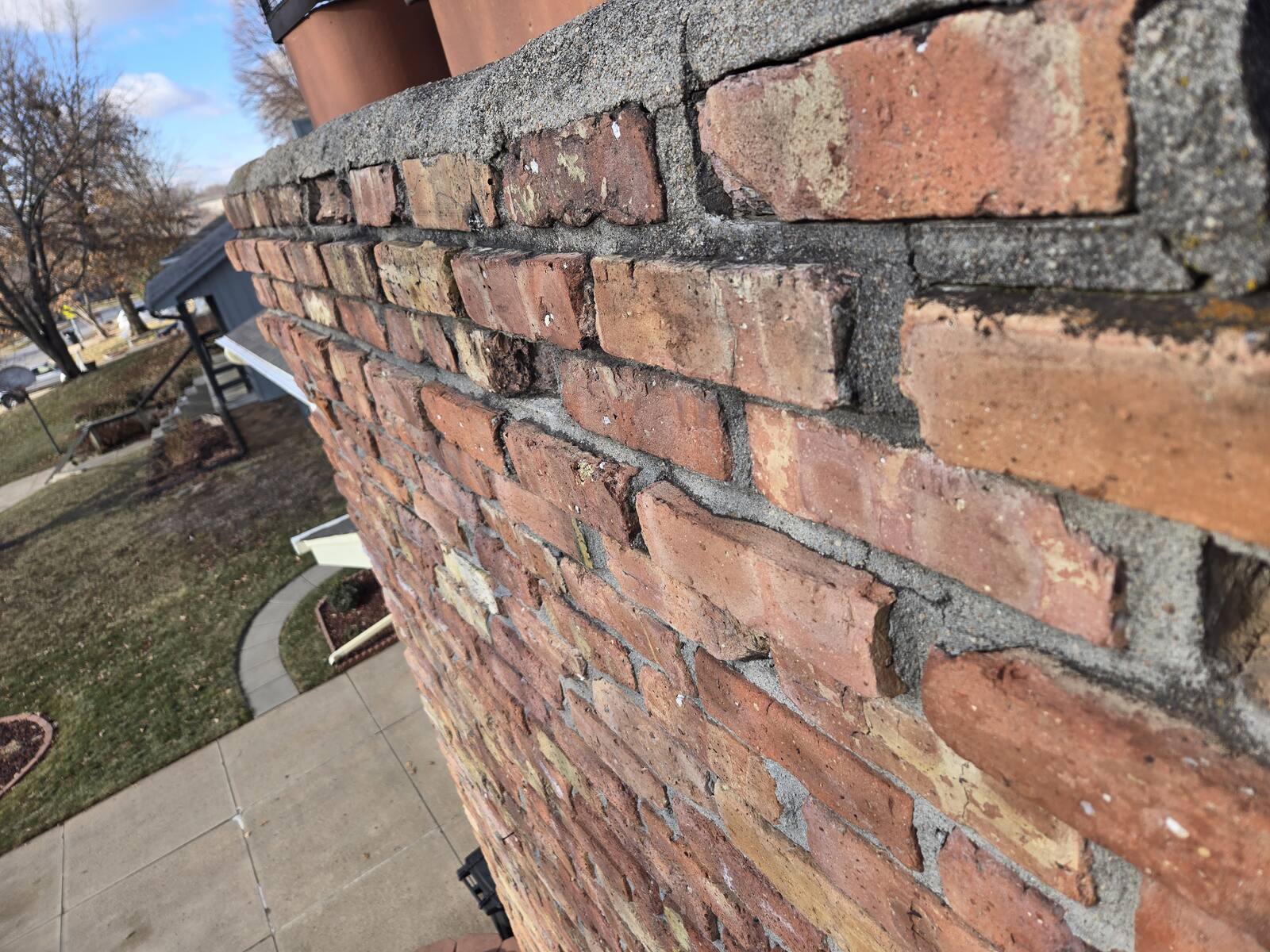
If you're getting ready to list a home in Millard or Papillion and there's manufactured stone veneer on the front, take a close look at it before the sign goes in the yard. Loose stones, hairline cracks, or a section that looks slightly bowed are exactly the kind of thing a buyer's inspector flags, and once it's on an inspection report it becomes a negotiating point instead of something you controlled on your own timeline.
Why Stone Veneer Becomes a Deal Issue
We see this pattern often enough in Omaha's western suburbs that it's become predictable. Homes built in the last couple decades in areas like Millard and Papillion often have manufactured stone veneer installed without the lath, plaster scratch coat, and moisture barrier the material actually needs behind it. Without that backing, the bottom rows of stone are the first to let go, usually starting as a stone or two that looks slightly separated from the wall. A previous owner (or a well-meaning handyman) often glues the loose stones back on, which holds for a while and then fails again, sometimes worse than before.
None of that is visible from the street. It shows up when a buyer's inspector gets close to the wall, taps a few stones, or notices a section that sounds hollow. At that point it's not a cosmetic note anymore, it's a line item the buyer's agent brings back in negotiations, and sellers who didn't know about it going in end up dealing with it under time pressure during closing.
What a Pre-Listing Check Actually Looks Like
Before you list, it's worth having someone walk the exterior and check the stone the way an inspector will: pressing on stones near the bottom courses, looking for hairline cracks radiating from corners, and checking whether any section sounds hollow when tapped. Most homes only have a problem in one or two areas, usually low on the wall or near a downspout where moisture collects. Catching that ahead of time means you're fixing it on your schedule, not scrambling during a 10-day inspection response window.
It's also worth checking the areas a casual walk-around tends to miss: behind mature landscaping, along the bottom edge where mulch or soil sits against the stone, and any spot where a downspout empties close to the wall. Moisture sitting against veneer for years is one of the more common quiet causes of backing failure, and it's rarely obvious until a stone actually comes loose.
Why a Glue Patch Isn't the Fix
The instinct is to regrip a loose stone with construction adhesive and move on, and it's an understandable one, it's fast and it looks fine for a showing. The problem is that glue never addresses why the stone came loose in the first place. If there's no lath and moisture barrier behind it, the same stone (or the ones next to it) will come loose again, and a sharp buyer's inspector or a repeat issue during a second inspection reads worse than if it had never been touched. A real repair means opening up the affected section, rebuilding the backing properly, and color-matching the replacement stone so the patch is not obvious from the street.
Color Matching Matters More Than People Expect
A repair that structurally holds but looks like a patch is still a red flag to a buyer, even after an inspector signs off. We match the replacement stone's color and texture to the surrounding wall using techniques we picked up directly from a stone manufacturer's field rep on a job in Bennington, so a properly repaired section blends into the rest of the elevation instead of standing out as an obvious fix. That matters for resale in a way that a technically-sound-but-visibly-patched repair doesn't, since a buyer walking the property for a second look will notice a mismatched patch even if their inspector never flags it as a defect.
What This Means If You're Buying, Not Selling
The same issue works in reverse if you're the one under contract on a Millard or Papillion home with visible veneer wear. It's worth asking for a closer look before the inspection contingency expires rather than assuming a few loose stones are purely cosmetic. Knowing whether it's an isolated patch job or a sign the whole elevation was installed without proper backing changes what you're actually negotiating for, and it's a very different conversation than a seller assuming a quick glue job will make the issue go away before closing.
What to Ask Before You Hire Someone to Fix It
Not every contractor who touches stone veneer actually rebuilds the backing before resetting the stone. Before you hire anyone to fix veneer ahead of a sale, ask specifically whether they're addressing the lath and moisture barrier behind the affected area, or just reattaching the visible stone. It's a fair question, and a contractor who's done this kind of repair before should be able to walk you through exactly what's happening behind the wall, not just what it will look like when they're done.
Getting Ahead of It
Whether you're prepping to list or you're a few weeks from closing on a home with visible veneer issues, the earlier this gets looked at, the more options you have. A stone or two loose near the bottom of a wall is a straightforward stone veneer repair, but it needs to be done as an actual repair, not a glue patch, if you want it to hold through the next inspection or the next decade.
Frequently Asked Questions
Will a home inspector always catch loose stone veneer?
A thorough inspector checks for it, especially near the bottom courses and around downspouts, but hollow-sounding sections higher on a wall or behind landscaping are sometimes missed. It's safer to have it checked before listing rather than relying on the buyer's inspection to catch everything.
How do I know if my stone veneer was installed correctly?
Correctly installed veneer has a lath base, a scratch coat, and a moisture barrier behind the stone, none of which are visible once the wall is finished. The best sign something is wrong is loose or bowing stones, especially low on the wall, which usually means that backing was skipped.
Can I just glue a loose stone back on myself before showings?
You can, and it will likely hold long enough for a showing, but it doesn't fix the underlying moisture or backing issue, so the same area is likely to come loose again, sometimes during the buyer's own inspection.
Does stone veneer repair need to match the existing color exactly?
Yes, for resale purposes especially. A structurally sound repair that's visibly a different color or texture than the surrounding stone still reads as a red flag to a buyer, even though the repair itself is solid.
How long does a stone veneer repair take before a home sale?
A localized repair on one or two sections can typically be scheduled and completed well within a normal listing timeline, which is why catching the issue early, before the home is under contract, gives sellers the most flexibility.
Should I disclose known veneer issues even if I plan to fix them?
That's a question for your real estate agent or attorney, since disclosure requirements vary. What we can tell you from the repair side is that a properly completed repair, done before listing, is a much stronger position than an unresolved issue discovered mid-transaction.
If you're preparing to list a home in Millard, Papillion, or anywhere else in the Omaha area and want a stone veneer check before it becomes an inspection issue, reach out and we'll take a look.