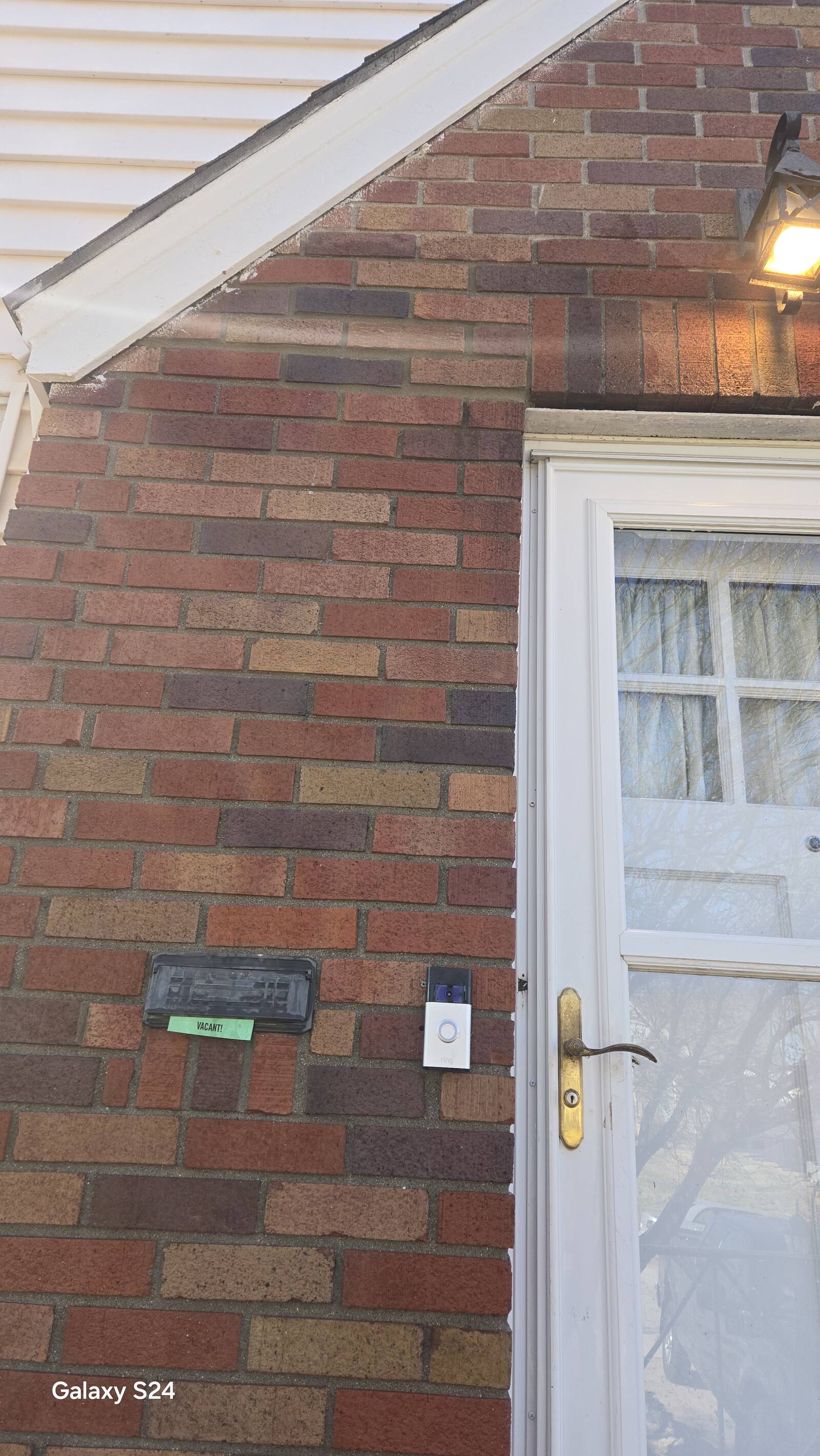
Spalling brick is brick that's flaking, popping, or crumbling at the face, and in Bellevue it's almost always a freeze-thaw problem rather than a sign the brick itself was bad. Water gets into the brick, freezes, expands, and pushes a layer of the face off. Left alone, it spreads to nearby brick. Caught early, it's a straightforward repair.
Why Bellevue brick spalls
Brick is porous by design, it's meant to absorb some moisture and let it evaporate back out. The trouble starts when water gets in faster than it can leave, usually because of a cracked mortar joint, a gap where flashing has failed, or a downspout dumping water straight against a wall. Once that water is inside the brick and Omaha's winter temperatures swing below freezing, it expands and forces the outer face of the brick to break away from the rest. That single freeze-thaw cycle might not do much damage on its own, but a Nebraska winter runs through dozens of them.
Bellevue's older neighborhoods see this more than newer construction, simply because more winters have passed since the mortar was last in good condition. But it isn't only an age problem. A newer home with a downspout aimed at the foundation, or a planter bed built up against a wall so it holds moisture against the brick, can spall within a handful of seasons. Where the water is coming from matters more than how old the brick is.
What spalling looks like before it's obvious
The earliest sign is usually a brick that looks slightly rougher or more matte than the bricks around it, like the glazed surface has dulled. Small flakes on the ground at the base of a wall, especially after a thaw, are another early tell. By the time a chunk of the brick face has actually popped off and left a divot, the damage has been progressing for a while, it just wasn't visible from a normal walk-by.
It's worth checking the mortar at the same time. Spalling brick and failing mortar usually show up together, since a cracked or missing mortar joint is often what let the water in to begin with. If the mortar between bricks is crumbly enough to scrape out with a fingernail, that's usually due for tuckpointing regardless of whether the brick itself is spalling yet. Repointing before spalling starts is one of the cheaper ways to prevent it altogether.
Spalling versus efflorescence
These two get confused often because they both show up as something white or flaky on brick, but they're different problems. Efflorescence is a white, powdery mineral deposit that forms on the surface as water evaporates and leaves salts behind. It wipes or brushes off, and the brick underneath is usually undamaged. Spalling is the brick itself breaking apart, the face physically separates and doesn't come back with a brush. Efflorescence is often a sign that water is moving through the brick, which is worth watching, but it isn't the same repair as a wall with actual spalling damage.
Why patching alone doesn't always hold
A common shortcut is to fill a spalled brick with mortar or a patching compound and call it done. That can work as a short-term fix, but it doesn't address whatever let the water in, so the brick next to the patch, or the same brick again, often starts spalling within a season or two. A proper repair replaces the damaged brick with a matching one and, just as important, fixes the water source: repointing the surrounding mortar, correcting a downspout, or adjusting grading so water moves away from the wall instead of toward it.
Matching an existing brick isn't always as simple as it sounds either. Brick color and texture vary by manufacturer and even by production run, so a mismatched replacement brick can end up more visible than the damage it replaced. We source replacement brick to match as closely as the original allows before we start pulling anything out, and on older homes that sometimes means tracking down a similar style rather than an exact match.
How much spalling is a structural concern
A handful of spalled bricks scattered across a wall is typically a surface issue, unattractive and worth fixing, but not something threatening the wall itself. It becomes a bigger concern when spalling is concentrated in one area, especially near the base of a wall or below a window, since that can point to a persistent water source doing damage below the surface too. A wall with widespread spalling across many courses of brick, or spalling paired with visible bowing or leaning, is worth a closer look before deciding on repair versus a larger rebuild.
What we check on a Bellevue brick inspection
We start by looking at where water is actually reaching the wall: gutters, downspouts, grading, window flashing, and any planting beds or landscaping built up against the brick. Fixing the water path matters as much as fixing the brick, since a repaired wall with the same drainage problem will spall again within a few seasons. From there we assess how many bricks need replacement, whether the surrounding mortar needs repointing, and whether the damage is isolated or spread across the wall. For general condition and color-matching background, our brick repair page covers what a typical repair involves, and homes in Bellevue are part of our regular service area.
When to schedule a repair
Spalling brick doesn't have to be fixed the day you notice it, but timing still matters. Repairing before the ground freezes gives mortar time to cure properly, and it closes off the entry point before another full winter of freeze-thaw cycles has a chance to make the damage worse. Waiting until spring isn't a mistake if the damage is minor and stable, but a wall that's actively losing brick face each time it thaws is better addressed before the next cold stretch rather than after it.
If you're not sure whether what you're looking at needs attention now or can wait, a quick inspection settles it faster than guessing. We'd rather tell a Bellevue homeowner their wall is fine for another season than have them pay for a repair that wasn't urgent yet.
Frequently Asked Questions
Can spalling brick be repaired without replacing the whole wall?
In most cases, yes. Individual spalled bricks can be cut out and replaced with matching brick, and the surrounding mortar repointed. A full wall rebuild is only necessary when spalling is widespread or paired with structural movement.
What causes brick to spall in the first place?
Water getting into the brick faster than it can evaporate out, then freezing and expanding. The water usually comes from a cracked mortar joint, failed flashing, or drainage directing water against the wall.
Is spalling brick just a cosmetic issue?
Often, yes, especially when it's a few scattered bricks. It becomes more than cosmetic when it's concentrated in one area or paired with bowing, which can point to a water problem doing damage beneath the surface.
Will a patched brick spall again?
It can, if the water source that caused the original damage isn't fixed. A patch without addressing drainage or mortar condition usually just delays the same problem.
How do you match replacement brick to the existing wall?
By sourcing brick as close to the original color, texture, and size as available, since brick varies by manufacturer and production run. We check the match before removing any existing brick.
If you're seeing flaking or crumbling brick on a Bellevue home, it's worth a look before it spreads to more of the wall. Browse examples of completed brick work on our photos page, or contact Omaha Masonry to schedule an inspection.