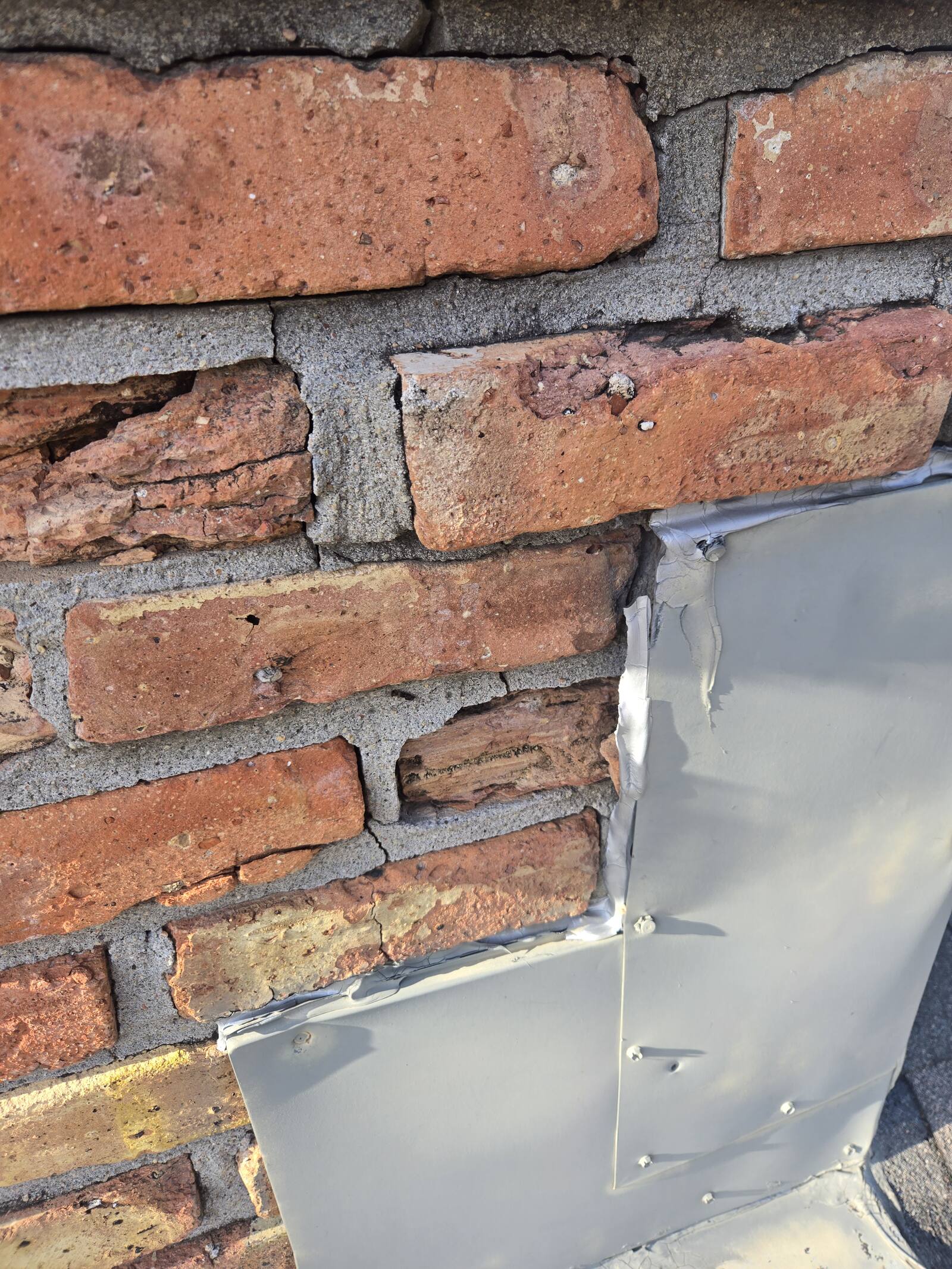
If you are touring homes in Elkhorn or Gretna, take a close look at the manufactured stone veneer around the porch and lower walls before you fall in love with the house. Loose or missing stones are one of the most common inspection flags in these newer subdivisions, and they come from veneer installed without proper backing. It is fixable and rarely a reason to walk away, but it is worth understanding before you write an offer.
Why this shows up so often in Elkhorn and Gretna listings
A lot of the housing stock in these western suburbs went up during the same building booms, often from the same handful of builders and installers. Manufactured stone veneer was a popular exterior choice because it looks like real stone at a fraction of the weight and cost.
The catch is that stone veneer only holds up long term when it is installed with a moisture barrier, metal lath, and a mortar scratch coat behind it. On a lot of these builds, that layered backing got skipped or shortcut. From the curb, a correct install and a shortcut install look identical. The wall itself is the only thing that knows the difference, and eastern Nebraska's freeze-thaw winters eventually expose it.
Because entire subdivisions share builders, the problem tends to cluster. If one listing on a street has stones missing near the porch, there is a good chance a few neighbors do too.
What the inspector is actually flagging
A home inspector is not going to open up the wall during a standard walkthrough. What they flag is the visible symptom, usually a stone or two sitting in the landscaping bed, hairline cracks radiating from a corner, or a section that looks patched with caulk or mortar.
That visible damage is worth taking seriously, but it is not the full picture. The stones that have already let go are the leading edge of a bond failure that is happening slower across the rest of the wall. An inspector's note is a prompt to get a real look, not the final word on scope.
Is it a dealbreaker, or a negotiating point?
For most buyers, this is a negotiating point, not a reason to walk. Stone veneer failure is a cosmetic and moisture-management problem, not a structural one. It does not mean the house is unsafe.
It is, however, a legitimate item to bring to the table. A documented repair estimate gives you a real number to negotiate with, whether that means asking the seller to handle it before closing or adjusting price to cover it yourself afterward. Buyers who skip this step sometimes find out the hard way a year or two later, once more stones have come loose and the repair scope has grown.
What a real repair actually looks like
It helps to know what you are asking for, whether you are negotiating with a seller or budgeting the work yourself after closing. On our stone veneer repair jobs, a correct repair means rebuilding the backing the original install skipped, not just gluing stones back where they fell.
That includes stripping the failed section back to solid stone, installing the moisture barrier and metal lath the wall was missing, rebuilding a proper mortar scratch coat, and resetting the stone with color-matched replacements where needed. Skip any of those steps and the same failure comes back within a season or two, which is exactly what a quick glue-and-caulk patch usually does.
The detail most repair quotes miss: color matching
Even a structurally correct repair can look wrong from the curb if the new stone does not match the old. Veneer color varies by product run and fades differently depending on sun exposure, so a patch section that is technically sound can still stick out for years if it was matched carelessly.
We learned some of the finer points of this directly from a manufacturer's field representative who came up from Texas to fix a homeowner's veneer job himself, after no local company, including us at the time, could be found to handle it. That kind of technique, blending new stone into weathered stone so the repair line disappears, is exactly the difference between a patch you can spot from the sidewalk and one you cannot. When you are comparing repair quotes, ask specifically how the contractor plans to match the stone, not just how they plan to reattach it.
What to do before you close
If you spot loose or missing stones on a home you are serious about, a few steps protect you.
First, do not assume it is isolated to what you can see. Ask for a real assessment of how far the failure extends, not just a patch quote for the visible gap. Loose stones near a porch or entryway are often the earliest sign, not the only sign, so it is worth having someone check the full elevation rather than the one spot the listing photos happened to show.
Second, get that assessment in writing before you finalize your offer or waive an inspection contingency. A verbal "it's probably fine" from a showing agent is not the same as a contractor's written scope, and the written version is what actually protects you if the issue turns out to be bigger once someone opens it up.
Third, if the seller is in Elkhorn or Gretna, remember the issue is common enough in these neighborhoods that a seller's disclosure or a prior repair attempt is worth asking about directly. Sellers in these subdivisions have often already dealt with a version of this themselves, on their own home or a neighbor's, so a direct question rarely comes as a surprise.
Finally, do not let the presence of stone veneer failure change your read on the home's overall condition. It is a specific, well-understood, and repairable exterior issue tied to how these subdivisions were built, not a signal about the rest of the house. Treat it as its own line item, get real numbers, and negotiate accordingly.
Frequently Asked Questions
Should I ask the seller to fix stone veneer before closing?
It depends on scope and your timeline. A small, well-documented repair is reasonable to request before closing. Larger failures often make more sense as a price credit, since a rushed pre-closing repair is exactly the kind of shortcut that caused the original problem.
Can I negotiate price instead of requiring a repair?
Yes, and it is often the cleaner path. A written repair estimate gives both sides a real number to negotiate against, rather than an open-ended concern. Get the estimate before you finalize terms.
Is stone veneer failure a sign of bigger structural problems?
Not usually. The veneer itself is not structural. The real risks are moisture reaching the sheathing behind the failed section and the damage spreading if it goes unaddressed, not the house's structural integrity.
Will this happen again after a proper repair?
Not if the backing gets rebuilt correctly, meaning moisture barrier, lath, and scratch coat, not just a glued-on patch. A repair that skips those layers tends to fail again in a season or two, which is the same mistake the original install made.
Does this affect every stone veneer home in the area, or just some?
Not every home, but it is common enough in Elkhorn and Gretna subdivisions from the same building era that it is worth checking on any home with stone veneer accents, even if nothing looks obviously wrong from the street.
How much does stone veneer repair typically cost?
It depends on how much of the wall system needs to be rebuilt, which varies a lot from house to house, so we do not quote a number without seeing the actual failure. A written estimate after a real look at the wall is the only way to get a figure you can actually negotiate or budget around.
If you are under contract on a home with stone veneer, or you already own one and want a real assessment instead of a guess, request a free estimate or call Omaha Masonry at 402-704-4894. We will tell you exactly what is happening behind the wall and what it actually takes to fix it right.