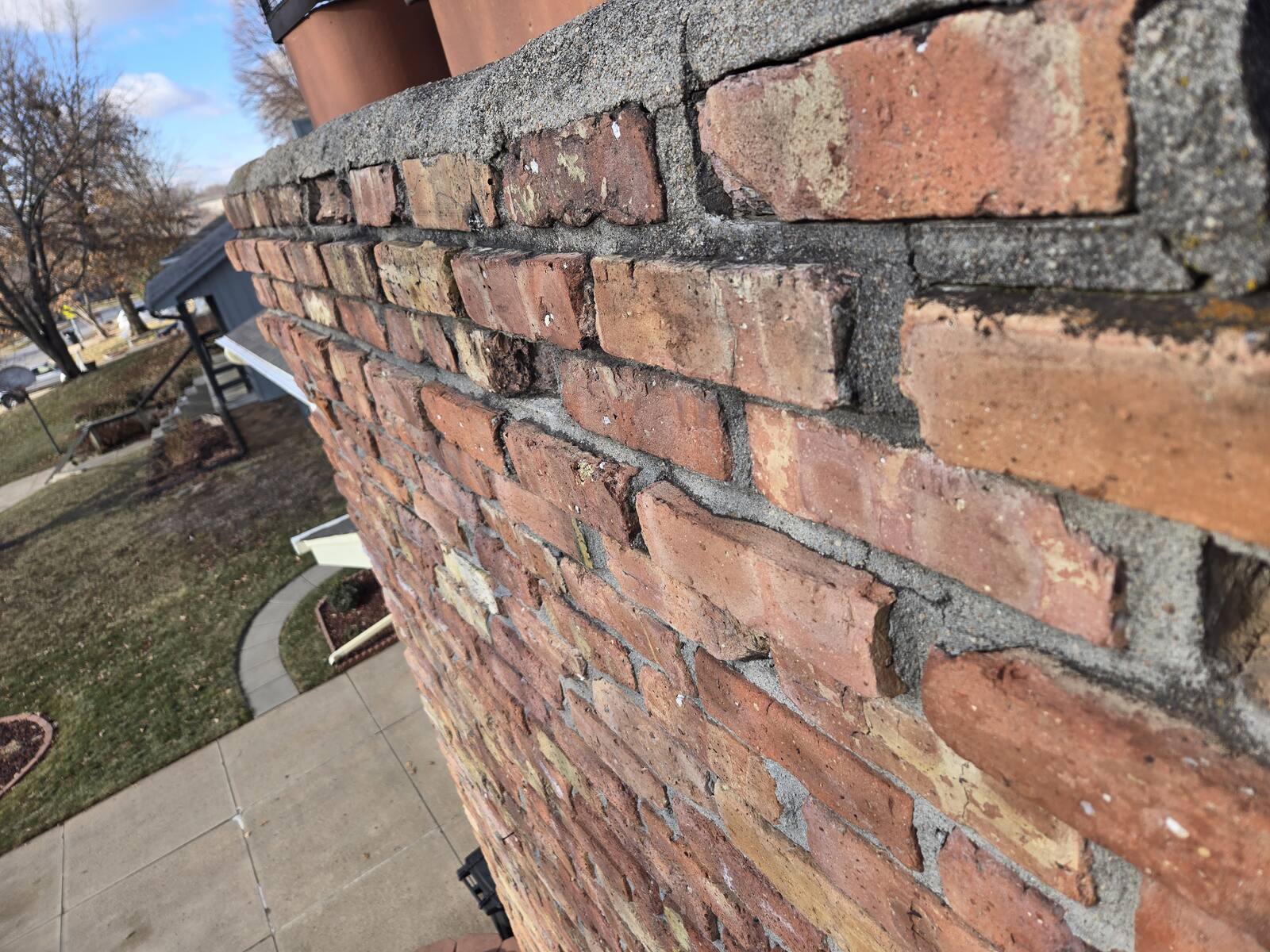
If a stone you glued back onto your house fell off again, the adhesive was never the problem. The backing behind the stone failed, and putting the same stone back onto failed backing gives it nothing to hold. A lasting repair means opening the wall, rebuilding the layers underneath, and then resetting stone into a surface that can actually carry it.
We see this constantly in Elkhorn, Gretna, and Bennington, on homes that are not old and were not neglected. The owners did nothing wrong. The wall was built wrong before they moved in.
What Is Actually Behind Your Stone
Manufactured stone veneer is not structural. It is a thin facing that hangs on the wall, and it depends entirely on what sits between the stone and the house framing.
Built correctly, that assembly has several layers. A water-resistive barrier goes over the sheathing so any moisture that gets behind the stone drains back out instead of soaking into the framing. Metal lath gets fastened through the barrier into the studs. A scratch coat of mortar is troweled over the lath and left rough. The stone is then set into a mortar setting bed against that scratch coat. Each layer has a job, and the stone is the last one, not the important one.
Built the way a lot of production homes went up during the veneer boom, several of those layers are simply missing. Stone stuck to bare sheathing or to a thin skim of mortar with no lath has nothing mechanical holding it. It stays up until water gets behind it, and then it is a matter of time.
Why the Bottom Row Goes First
Almost every failure we get called to starts near the ground.
Water that gets behind veneer runs down and collects at the bottom of the wall. If there is no weep screed, no flashing, and no drainage gap, that water has nowhere to exit. It sits against the back of the stone and against whatever is behind it. Freeze-thaw cycling does the rest. Nebraska runs through dozens of freeze and thaw swings between fall and spring, and water trapped in a wall expands every time it freezes. That expansion pushes the stone away from its backing a fraction at a time.
Sprinkler spray, mulch beds piled above the bottom of the veneer, and downspouts dumping next to the foundation all accelerate it. So does veneer that runs all the way down to grade with no clearance, which is common on newer builds and gives soil moisture a direct path into the assembly.
By the time a stone drops, the backing behind it has usually been wet for years.
Why Construction Adhesive Never Holds
The instinct is understandable. The stone is intact, the wall looks fine, and a tube of adhesive costs almost nothing. So the stone goes back up and holds through the summer.
Then it falls again, and usually it brings a neighbor with it.
There are three reasons. First, the adhesive is bonding to a surface that already failed. Deteriorated mortar, loose scratch coat, or damp sheathing cannot hold anything, no matter what you put on it. Second, adhesive is not vapor permeable the way mortar is, so it traps moisture at exactly the spot that already has a moisture problem. Third, a glued stone sits proud of the surrounding stones and out of plane, which opens a gap at the joint and gives water a new entry point. The patch makes the wall wetter than it was.
The same logic applies to smearing mortar over the face of a joint to seal a crack. It hides the symptom for a season and leaves the cause running underneath. That is true across most masonry repair work, not just veneer.
What a Real Stone Veneer Repair Looks Like
A proper repair is a wall repair with stonework at the end of it.
We start by finding the edge of the damage, which is almost always larger than the visible hole. Sound stone next to a failed area is often loose, and tapping across the wall tells us where the good backing starts. Stopping at the visible damage guarantees a callback.
Then the failed section comes off. We remove the loose stone and take the assembly back to sheathing so we can see what is actually there. This is where we learn whether there was ever a moisture barrier, whether lath was installed, and how far water has traveled into the framing. Rotted sheathing gets replaced before anything else happens.
The backing gets rebuilt properly. Water-resistive barrier, lath fastened into structure, scratch coat, and drainage detail at the bottom of the section so water that gets in has a way back out. If the original wall had no weep detail, adding one is part of the fix, not an upgrade.
Only then does stone go back. Salvaged stone gets reused where it is sound, and gaps get filled with matching stone. Matching is its own skill. Manufactured stone lines change and get discontinued, colors weather over years of Nebraska sun, and a patch of factory-fresh stone in the middle of a ten-year-old wall reads as a repair from the street. We color match repairs so the section blends into the surrounding wall, using techniques we learned directly from a stone manufacturer field rep on a Bennington job. You can see examples of finished work on our project photo gallery.
What This Means If You Are Buying or Selling
Veneer damage shows up in a lot of Elkhorn and Gretna inspection reports, and it tends to get mispriced by both sides.
Sellers underestimate it because they are pricing the stone. Buyers overestimate it because an inspector wrote something alarming about moisture intrusion. The real number depends on how far the water traveled and whether framing is involved, and neither side can know that until someone opens the wall.
If you are on either side of that conversation, get an actual masonry assessment rather than negotiating off a home inspector's general note. An inspector is looking at the surface. We are looking at what the surface is attached to.
Catching It Before a Stone Drops
Walk the base of your veneer walls once a year, ideally in spring after the freeze-thaw season.
Press on stones near the bottom and near any corner, window, or door. Movement means the backing is going. Look for hairline gaps opening between the stone and the trim, for stones sitting slightly out of plane with their neighbors, and for white mineral staining, which is a reliable sign that water is moving through the assembly. Check that mulch and soil sit below the bottom of the veneer and that sprinklers are not spraying the wall.
Catching a soft section early keeps the repair to one area instead of one elevation.
Frequently Asked Questions
Can I just glue my stone veneer back on?
It will hold temporarily and fail again, usually within a season or two. The stone came off because the backing behind it failed, and adhesive bonds to that same failed backing. It also traps moisture and sits the stone out of plane, which opens a new path for water into the wall.
How do I know if the damage is bigger than what I can see?
Tap along the wall around the failed area and listen. Solid backing sounds tight, and failed backing sounds hollow. Gentle hand pressure on nearby stones will also reveal movement. Hollow or moving areas beyond the visible damage mean the repair section needs to extend further than the hole suggests.
Why is this so common on newer homes in Elkhorn and Gretna?
Manufactured stone accents went onto a lot of homes during a period of very fast building in the western suburbs. When crews skipped the moisture barrier, lath, or drainage detail, the wall looked identical on day one and behaved completely differently a decade later. It is a construction detail issue, not an age issue.
Will the repaired section match the rest of my house?
That is the goal, and it is a large part of the work. We reuse sound salvaged stone where possible and color match new stone to the weathered surrounding wall. Stone lines get discontinued and existing stone fades over the years, so blending is a hands-on process rather than a catalog order.
Is stone veneer damage covered by homeowners insurance?
Gradual water intrusion and construction defects are generally excluded, while sudden events like storm or impact damage may be covered. Policies vary, so check with your carrier. Documentation of what we find when the wall is opened is useful either way if you are pursuing a claim or a builder conversation.
When is the best time of year to do this work in Omaha?
Late spring through fall gives mortar the temperature range it needs to cure properly. If you find damage heading into winter, the priority is keeping additional water out of the open assembly until conditions allow a permanent repair rather than rushing a pour in freezing weather.
Omaha Masonry is owner-operated with decades of hands-on experience, and we were recognized by the Omaha World-Herald for Best Concrete, Masonry and Brick Installation. If stone is loose or already off the wall on your Elkhorn, Gretna, or Bennington home, we will come look at it and tell you honestly how far the damage runs. Get in touch through our contact page or call 402-704-4894, and see more about our stone veneer repair service before you reach for another tube of adhesive.