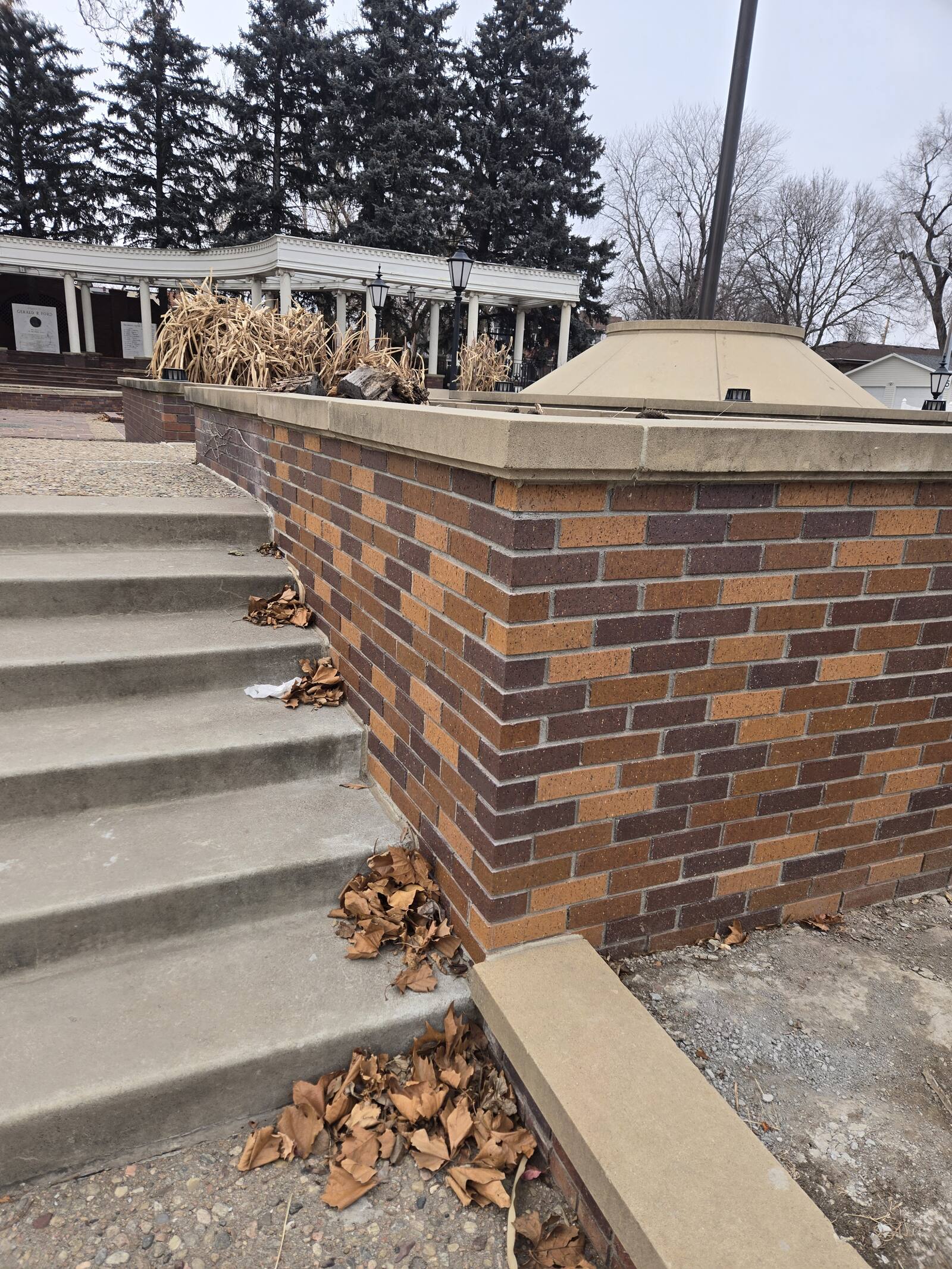
Retaining walls in Omaha lean for one main reason: expansive clay soil that swells when wet and shrinks when dry, pushing against the wall season after season until it tips, bows, or cracks. Poor drainage speeds the process up, because water trapped behind a wall multiplies the pressure the clay already creates. The fix depends on how far the wall has moved, which is why an honest assessment matters more than a quick patch.
Our crew has repaired and rebuilt retaining walls across Omaha, Millard, Elkhorn, and Papillion for years, and the same story repeats: the wall was built to hold back dirt, but nobody built it to handle water. Here is what is actually happening behind a leaning wall, how to tell whether yours can be saved, and what a wall built for this soil looks like.
What Omaha's Clay Soil Does to a Retaining Wall
Much of the Omaha metro sits on expansive clay. When spring rain or snowmelt soaks in, that clay absorbs water and swells. In a dry August, it shrinks and pulls back. A retaining wall stands in the middle of that cycle, taking pressure that rises and falls with the weather.
The pressure is not just the weight of the dirt. Saturated clay pushes laterally against the back of a wall, a load engineers call hydrostatic pressure when water is involved. A wall with no way to relieve that pressure has only one option: move. First it leans a fraction of an inch. Then the joints open. Then a bow forms in the middle where the pressure is highest.
Freeze-thaw makes it worse. Water in the soil behind the wall freezes and expands in winter, shoving the wall outward, then thaws and lets it settle into its new, slightly worse position. A few dozen of those cycles, which is one or two Omaha winters, can turn a straight wall into a visibly leaning one. It is the same freeze-thaw mechanism that damages chimneys and brick around here, just acting on a bigger surface.
The Warning Signs, From Cosmetic to Urgent
Early signs worth watching
Hairline cracks in mortar joints, small gaps opening between blocks or stones, and soil settling or washing out near the base of the wall. At this stage the wall is talking, not failing. Repointing failed joints and correcting the drainage can often stop the progression, work that falls squarely under our masonry repair service.
Signs the wall is actively failing
A visible lean you can see standing at the end of the wall, a horizontal bow in the middle, stair-step cracking through block, or stones that have shifted out of plane. Once a wall has rotated or bowed, the soil behind it has moved with it, and pushing it back is not realistic. The question shifts from repair to rebuild.
Signs that need attention now
A wall leaning noticeably more after one wet season, crumbling or heaved sections, or a failing wall above a patio, driveway, or walkway where people pass. Walls rarely collapse without warning signs first, but a wall that is accelerating is a wall on a schedule.
Repair or Rebuild: How We Decide
The honest answer comes from three checks. First, how far has the wall moved? A wall that is still plumb or nearly plumb with localized joint failure is a repair candidate. A wall leaning past a few degrees or bowed through its middle has lost its geometry, and geometry is what makes a gravity wall work.
Second, what is the wall built from, and how? Mortared stone and block walls can often be repointed and patched if the footing has not moved. Walls built without a real footing, or dry-stacked walls that were never engineered for their height, tend to fail as a system rather than in one spot.
Third, and most important, why did it fail? If the cause was clay pressure and trapped water, patching the visible damage without fixing drainage guarantees a repeat. Any quote that does not mention drainage is a quote for doing the job twice.
When a rebuild is the right call, it is also an opportunity. The new wall gets a proper compacted base, drainage aggregate, a perforated drain pipe that daylights somewhere useful, filter fabric to keep clay out of the aggregate, and weep holes where the design calls for them. That package is what separates a wall that lasts decades from one that starts leaning again in five years. You can see examples of both repair and full rebuild work on our project photos page.
What a Wall Built for Omaha Soil Includes
Whether it is block, natural stone, or a mortared masonry wall, the parts you never see decide how long it stands:
- A compacted gravel base below grade, deep enough for the wall's height, so the first course sits on stable material instead of raw clay.
- Drainage aggregate behind the wall instead of backfilled clay, giving water a path down instead of a reason to push.
- A perforated drain at the base that carries collected water out to daylight or a drain, relieving pressure before it builds.
- Filter fabric between soil and aggregate so the drainage layer does not silt shut over the years.
- Setback and reinforcement matched to height. Taller walls lean into the slope and, past a certain height, need engineering. A contractor who pours the same wall at every height is guessing.
This is the standard we build to on retaining wall projects across the metro, because the soil here does not forgive shortcuts.
Why Local Experience Matters for This Work
Retaining walls are one of the trades where regional knowledge shows up directly in the result. A wall design that works fine in sandy soil fails here, because Omaha clay holds water and pushes harder than lighter soils. Our team has worked on walls from older Omaha neighborhoods to the newer developments in Elkhorn and Gretna, and that range is part of why Omaha Masonry was recognized by the Omaha World-Herald as a best concrete, masonry, and brick installation business. The recognition is nice. The walls still standing straight are the better argument.
Frequently Asked Questions
Can a leaning retaining wall be straightened?
Usually no. Once a wall has rotated or bowed, the soil behind it has shifted into the space the wall gave up, and pushing the wall back against that soil is neither practical nor lasting. Minor leans can sometimes be stabilized in place, but a significant lean generally means rebuilding that section correctly.
How long do retaining walls last in Omaha?
A properly built wall with real drainage routinely lasts several decades, even in clay soil. Walls built without a compacted base or drainage often show movement within five to ten years. The construction details behind the wall, not the material in front, are what set the lifespan.
What causes a retaining wall to bow in the middle?
Bowing is lateral soil and water pressure exceeding what the wall can resist, concentrated where the wall is weakest. In Omaha that usually means saturated clay with no drainage path pushing against the middle of the span. A bow indicates a system problem, so inspect the whole wall, not just the bulge.
Do I need a permit to rebuild a retaining wall in Omaha?
It depends on the wall's height and location, and requirements differ between Omaha and surrounding communities like Papillion, La Vista, and Bellevue. Taller walls commonly require permits and sometimes engineering. If your project needs one, that gets identified during the estimate so nothing stalls mid-project.
Is it worth repairing an older stone retaining wall instead of replacing it?
Often yes, especially when the wall is still plumb and the damage is failed mortar joints or a few displaced stones. Repointing and resetting preserves the original stone and character at a fraction of the disruption of a rebuild. The deciding factors are footing condition and how much the wall has moved.
If a wall on your property is leaning, bowing, or shedding mortar, the useful first step is having someone look at it who repairs and rebuilds these walls in this soil every season. Request an estimate and we will take a look, explain what is happening behind the wall, and give you a straight answer on repair versus rebuild.