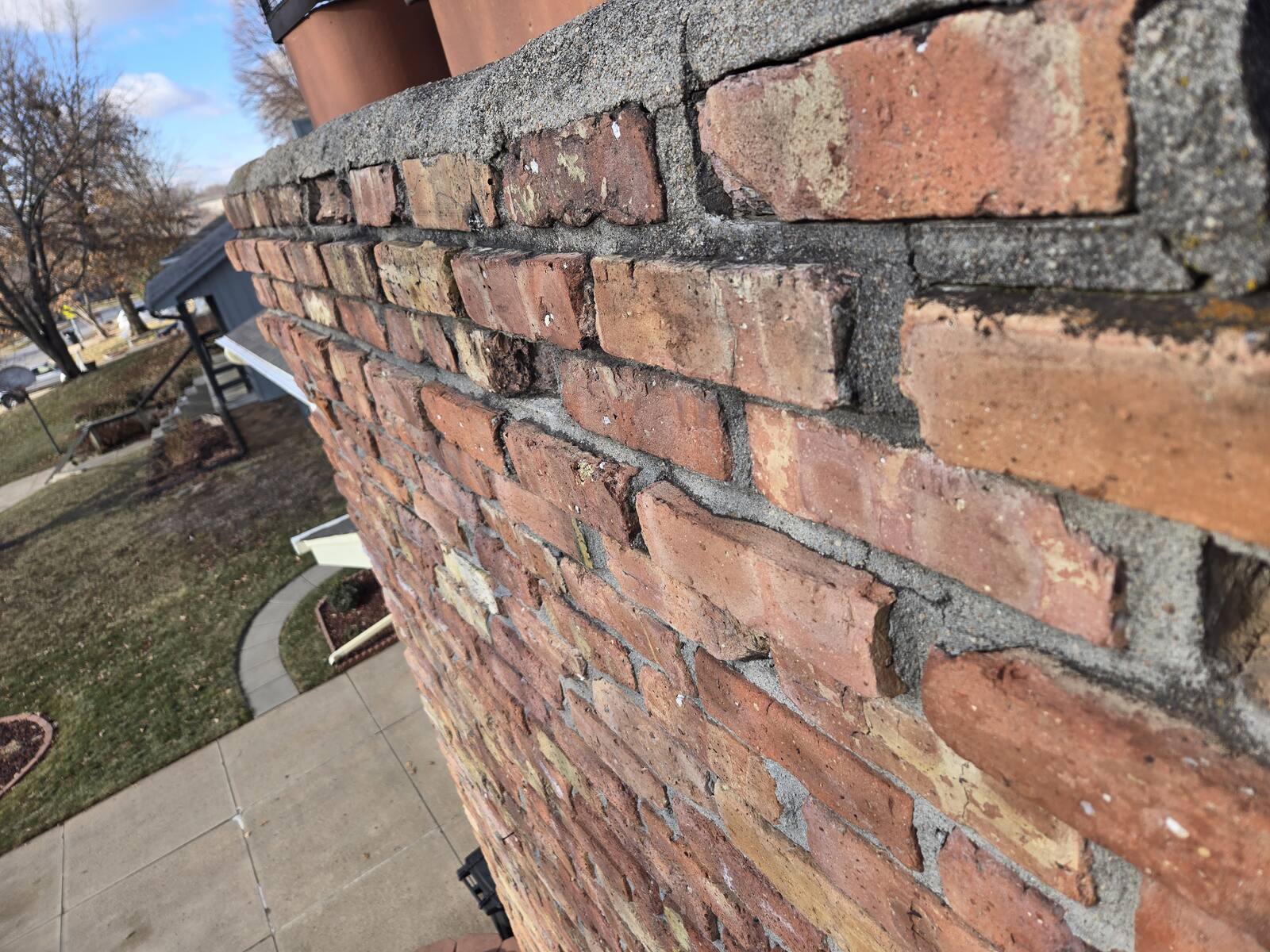
White residue, dark stains that stay after the rain stops, and stones that rock or pull away on the stone veneer of an Elkhorn home almost always point to the same problem: water getting behind the stone and not getting back out. On many newer homes the veneer went up without the lath, scratch coat and moisture barrier it needs, so water collects behind it. The signs on the surface are the early warning before stones start falling.
We see this pattern regularly on newer homes in Elkhorn and the other western suburbs. Here is what each sign means, why it happens, and what a real repair involves.
Why Water Is the Root Problem
Manufactured stone veneer is not waterproof. Rain soaks into the stone and the mortar joints, and some of it moves through to the back. A properly built veneer wall plans for that. Behind the stone there should be a water resistant barrier over the sheathing, metal lath fastened to the wall, and a mortar scratch coat that the stone bonds to. That system lets the stone hold on firmly and gives water a path down and out.
When those layers are missing or done poorly, water has nowhere to go. It sits against the back of the stone and the wall behind it. Through Omaha's freeze and thaw cycles, trapped water expands, the bond between stone and wall weakens, and the problems on the surface start to show. Bottom stones usually go first, because that is where water collects as it runs down the wall.
Sign 1: White Residue on the Stone
A white, chalky or crusty film on veneer is called efflorescence. It happens when water moves through the stone or mortar, picks up salts along the way, and leaves them on the surface as it dries.
A light haze on a brand new wall can be part of the normal curing process and may fade. Efflorescence that keeps coming back, gets heavier after storms, or concentrates in one area tells you water is moving through that part of the wall on a regular basis. Washing it off treats the symptom. The question is where the water is coming from.
Where to look
- Under windows and around trim, where water can get behind the stone at the edges.
- Near downspouts and gutters that overflow onto the wall.
- Along the bottom courses, where water collects as it runs down.
Sign 2: Dark Stains That Don't Dry Out
Stone veneer darkens when it gets wet and lightens again as it dries. That is normal. A patch that stays dark long after the rest of the wall has dried means that area is holding water.
Watch the wall the day after a good rain. If the bottom few rows, the area under a window, or a section near a downspout stays dark while everything else has dried, that spot deserves a closer look before winter.
Sign 3: Cracked Joints and Hollow Sounding Stones
Mortar joints that crack along the edge of a stone, or stones that sound hollow when you tap them lightly with a knuckle, are signs the bond behind the stone is failing. The stone may still be in place, but it is no longer firmly attached.
Do not pry at a stone to test it. If a stone moves when you press it gently, or a joint has opened up all the way around it, treat it as loose.
Sign 4: Stones Pulling Away or Falling
This is the late stage. Once stones start separating from the wall, water has usually been working behind them for a while. The bottom courses near the ground or patio are typically first, and more tends to follow over the next few winters if nothing changes.
The common response is to glue the fallen stones back on. That usually fails, because glue does nothing about the missing backing or the trapped water. The stone falls again, often taking its neighbors with it. We cover why in our post on glued back stone veneer.
What a Real Repair Involves
A lasting repair fixes what is behind the stone, not just the stone itself.
- Remove the failed section. Loose and damaged stone comes off carefully so it can be reused where possible.
- Find and fix the water source. Gutters, flashing, trim gaps and grading all get checked.
- Rebuild the backing. Moisture barrier, lath and scratch coat go back on the wall the way they should have been installed.
- Reset the stone. Stones are set into the new scratch coat, with new stone color matched to the existing wall where pieces cannot be saved.
Our owner, Jesse, learned much of this approach working alongside a stone manufacturer's field representative on a Bennington job. Rebuilding the backing and color matching new stone to an existing wall is a big part of our stone veneer repair work across Elkhorn, Gretna and Bennington.
Why Fall Is the Time to Check
The damage behind veneer speeds up in winter, when trapped water freezes and expands. Catching the warning signs in the fall gives you the chance to have the wall looked at and the water source addressed before another season of freeze and thaw. A small section repaired now is a much smaller job than a whole wall that comes loose over the next two or three winters.
If you live in Elkhorn and want a second set of eyes on your veneer, our Elkhorn masonry page covers the work we do in the area.
What You Can Do Before the Repair
A few simple steps can slow the damage while you line up a proper repair. Clean out gutters and make sure downspouts carry water away from the veneer instead of spilling onto it. Check that sprinklers are not spraying the stone. Keep mulch and soil from piling up against the bottom courses, so the lowest stones are not sitting in wet material. None of this fixes missing backing, but it reduces how much water reaches the wall.
Frequently Asked Questions
What is the white residue on my stone veneer?
That white, chalky film is efflorescence. Water moving through the stone and mortar carries salts to the surface and leaves them behind as it dries. A light haze on new work can fade, but residue that keeps coming back or gets heavier after storms means water is regularly moving through that part of the wall.
Is efflorescence a sign of serious damage?
By itself it is not damage, but it is a sign of water movement. On veneer installed without a proper moisture barrier and backing, regular water movement is what eventually loosens stones. If efflorescence appears alongside dark patches, cracked joints or loose stones, have the wall looked at before winter.
Why do the bottom stones fall off first?
Water that gets behind veneer runs down the wall and collects at the bottom courses. Without a proper barrier and a way for that water to drain out, the lowest stones stay wet the longest and take the most freeze and thaw stress, so their bond fails first. Splashback from the ground or a patio adds to it.
Can I just glue the loose stones back on?
Glue usually fails because it does not fix the missing backing or the trapped water behind the stone. The stone tends to fall again, often with the stones next to it. A lasting repair removes the failed section, rebuilds the moisture barrier, lath and scratch coat, then resets the stone properly.
Do you repair stone veneer in Elkhorn?
Yes. Stone veneer repair on newer homes in Elkhorn, Gretna and Bennington is a core part of our work. We rebuild the backing behind failed sections and color match new stone to the existing wall where original pieces cannot be reused.
Seeing stains, white residue or loose stones on your veneer? Omaha Masonry was named Best Concrete, Masonry and Brick Installation by the Omaha World-Herald, and we would be glad to take a look. Call us at 402-704-4894 or request a visit before winter sets in.