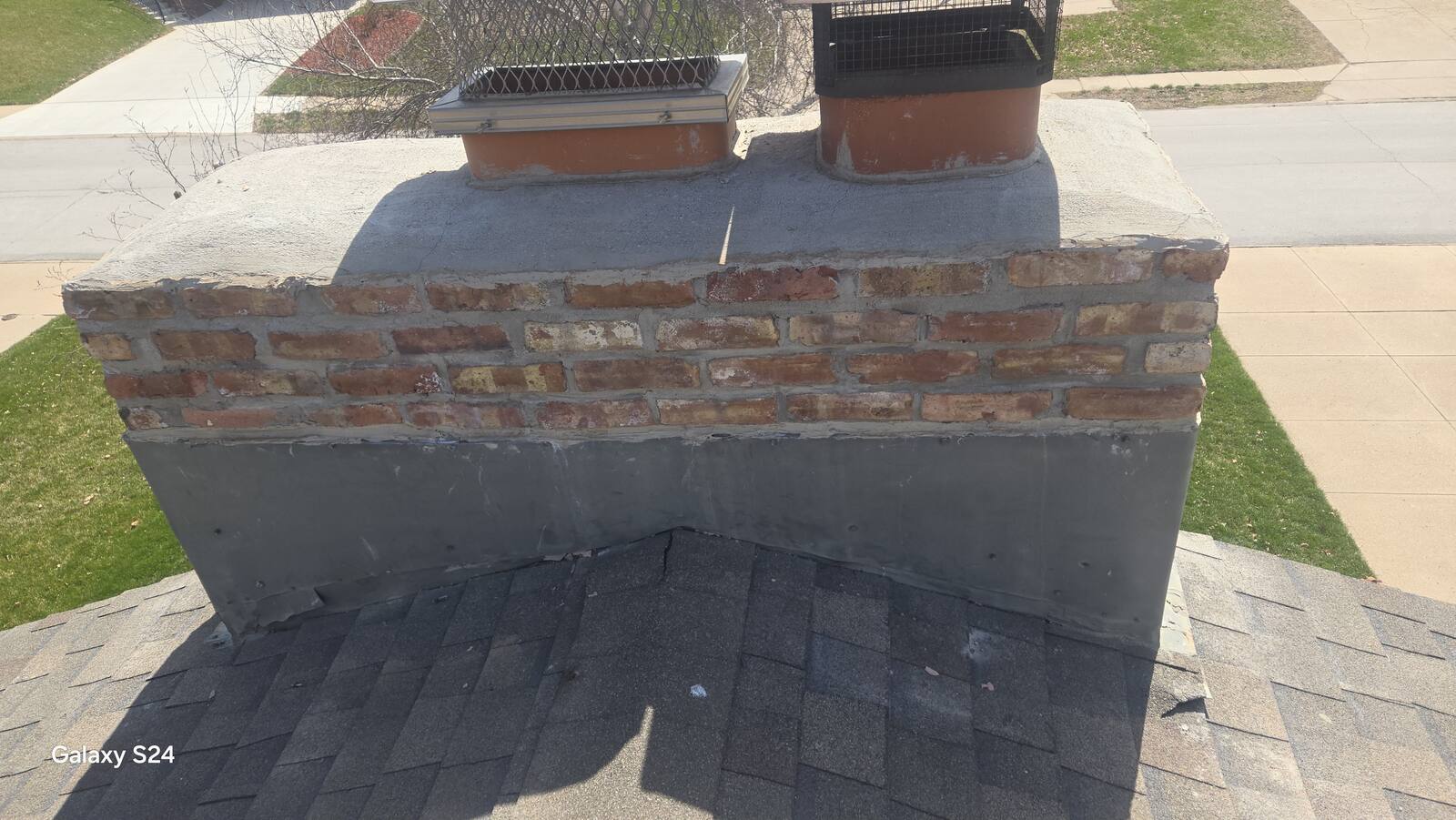
A cracked chimney crown is a small problem that turns into a big one if you leave it alone through a winter. The crown is the slab of concrete or mortar across the top of your chimney, and its only job is to shed water away from the brick below. If you can see cracks in it from the yard, or you notice crumbling at the edges, water is already finding a way in, and it is best to have a mason look at it before the freezing weather starts.
Around Ralston, many of the homes sit on older brick chimneys that have been through decades of Nebraska weather. This guide walks through what the crown does, what damage looks like, what you can safely check from the ground, and how a proper repair differs from a quick cover-up.
What a Chimney Crown Actually Does
Think of the crown as a lid. The flue tile sticks up through the middle, and the crown surrounds it and slopes outward so rain and melting snow run off the sides instead of pooling on top. One common description is that the crown works like a helmet for the chimney, and that without it, water would pour right into the bricks and mortar.
That matters because brick and mortar are porous. They are built to handle rain running down the face of the wall, not standing water sitting on a flat surface. The crown keeps the most exposed part of the chimney dry, and everything below it depends on that.
Why Crowns Crack
Most crowns we see around Ralston, Papillion and the rest of the metro are poured concrete or a thick mortar coat. Both are rigid, and both crack for a few predictable reasons.
- Freeze-thaw cycles. Water gets into a hairline crack, freezes, expands and pushes the crack wider. The same crown can go through this again and again over a winter. One chimney resource notes that concrete crowns start cracking from the freeze/thaw cycle over time.
- Thin or poorly built crowns. A crown that was skimmed on with a thin layer of mortar instead of being formed and poured properly will crack early, often within a few years.
- No slope. If the surface is flat or dips toward the flue, water sits there and works its way in.
Signs of Crown Damage You Can Spot From the Ground
You do not need to climb on the roof to get a decent idea. A pair of binoculars and a clear morning will tell you a lot. Look for these.
- Visible cracks across the top. Hairline cracks are the early stage. Wide cracks, or cracks that run from the flue to the edge, are a clear sign the crown is failing.
- Chunks missing at the edges. Broken corners and a ragged outline mean the crown is breaking up.
- White staining on the brick below. Chalky residue like this often means water is moving through the masonry.
- Dark streaks or damp patches on the upper bricks. If the top few courses stay wet long after the rest of the wall dries, moisture is coming in from above.
- Loose or crumbling mortar joints near the top. Once water starts getting in, it eats away at the mortar joints, so the top of the chimney is usually the first place to show it.
- Staining or peeling paint on the ceiling or wall around the chimney inside. This one means water has traveled a long way, and it is worth getting looked at promptly.
What Happens If You Wait
A crack in the crown is an open door. Every rain and every snowmelt sends water into the chimney, and each freeze pushes it apart a little more. The usual sequence goes like this: the crown cracks, the top courses of brick absorb water, the mortar joints soften and wash out, and eventually bricks start to spall, which means the face flakes off. At that point you are no longer talking about a crown. You are talking about rebuilding part of the chimney.
That is the reason timing matters so much. Fixing a crown is a contained job. Waiting until the brick is failing is a different, larger job. If you want to see how we think through that decision, our post on chimney repair versus a full rebuild covers how to tell which side of the line you are on.
Repair or Replace: How a Mason Decides
Not every cracked crown needs to be torn off. The right answer depends on how deep the damage goes and what is happening underneath.
When a repair can work
If the crown is structurally sound and the cracks are shallow and narrow, a mason can clean the cracks, fill them with a flexible, masonry-rated sealant or repair mortar, and coat the top with a water-repellent crown coating. This is a reasonable choice for an otherwise healthy crown that is just starting to show its age. It buys time, and it is much better than ignoring it.
When the crown should be replaced
A new crown is the right call when the cracks are wide or run all the way through, when pieces are breaking off, when the slope is wrong, or when the crown was never built correctly in the first place. A proper replacement means removing the old slab, checking the brick underneath, and building a new crown with the right shape and reinforcement. It should slope away from the flue so water runs off the sides instead of pooling on top.
Check the Rest of the Top of the Chimney While You Are At It
The crown is only one part of the weather barrier. A mason looking at your chimney should also check the following, because problems here often travel together.
- Flashing. The metal that seals the chimney to the roof. If it has lifted, rusted or pulled away, water gets in at the base even when the crown is perfect.
- Mortar joints. Joints that are recessed, crumbling or cracked need tuckpointing before they let more water in.
- Brick condition. Spalling or soft brick near the top points to long-term moisture trouble.
- Flue tile. Cracked or missing tile at the top of the flue can let water run down inside the chimney.
- Chimney cap. A metal cap over the flue keeps rain and animals out. It does not replace a good crown, but the two work together.
If you want a broader look at how our winters wear on a chimney as a whole, we wrote about it in what freeze-thaw winters do to your chimney.
What We Do on a Crown Repair in Ralston
Omaha Masonry is owner-operated with a small crew and decades of hands-on masonry experience, and our work was recognized by the Omaha World-Herald as Best Concrete, Masonry and Brick Installation. On a chimney crown job we start by looking at the whole top of the chimney, not just the slab. We check the brick, the joints, the flashing and the flue tile, and we tell you plainly whether the crown can be repaired or needs to be replaced. If the crown has to come off, we rebuild it with the correct slope so it sheds water the way it is supposed to. If the bricks or joints below are damaged, we repair those at the same time so you are not paying for the same access twice.
You can read more about the full scope of our chimney repair work, and about how we serve homeowners in Ralston.
Frequently Asked Questions
How long does a chimney crown last?
It depends on how it was built and how harsh the weather is. A well-formed, properly poured crown can last for decades, while a thin mortar coat may crack in a few years. In a climate with repeated freezing and thawing, regular checks every year or two are a good habit, especially for older chimneys.
Can I seal a cracked chimney crown myself?
Small hairline cracks can sometimes be treated with a product made for masonry crowns, but it needs the right material and a dry day. Wide cracks, loose pieces or a crown with no slope are beyond a do-it-yourself fix, and working on a roof carries its own risks. A mason can assess it safely.
What is the difference between a chimney crown and a chimney cap?
The crown is the concrete or mortar slab across the top of the masonry. The cap is the metal or stone covering that sits over the flue opening itself. The crown protects the brick, and the cap keeps rain, debris and animals out of the flue. A chimney should have both.
Do you work on chimneys outside Ralston?
Yes. We serve Omaha, Elkhorn, Gretna, Bennington, Millard, Papillion, La Vista and Bellevue as well as Ralston.
Get Your Chimney Crown Looked At
If you have noticed cracks, crumbling or stains on your chimney, do not wait for the first freeze to make the decision for you. Call us at 402-704-4894 or request an estimate, and we will take a look at the whole top of your chimney and tell you what it needs.