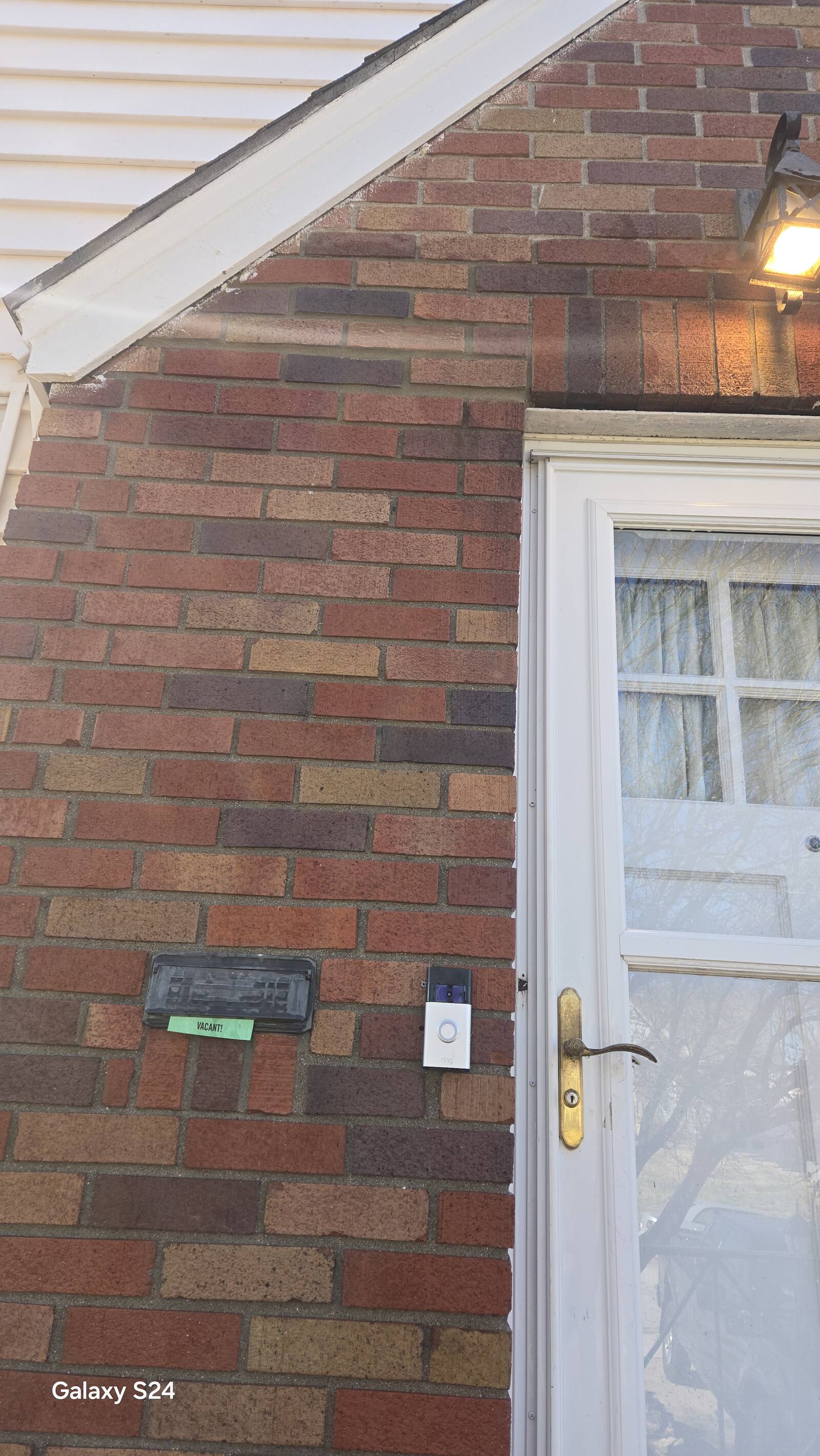
If the mortar between your bricks is sandy, cracked, or falling out, it is time to repoint, and in Papillion it is better to schedule that work before hard freezes set in than to let winter get into open joints. Repointing means cutting out the failed mortar and packing in fresh mortar so water stays out of the wall.
What Repointing Actually Is
Repointing is often called tuckpointing around Omaha, and the two terms get used almost interchangeably by homeowners. The idea is simple. Mortar is the sacrificial part of a brick wall. It is meant to wear before the brick does, and when it finally gives out, it needs to be replaced.
The work is not a surface patch. A proper job removes the old mortar to a real depth, cleans out the dust, and fills the joint in layers so the new mortar bonds and holds. If you want the full picture of the process, our tuckpointing service page walks through it step by step.
Signs the Mortar on Your Papillion Home Is Failing
The National Park Service lists the usual triggers for repointing in its guidance on repointing mortar joints in historic masonry buildings: disintegrating mortar, cracks in the joints, loose bricks, and damp walls. That list holds up on newer homes too. Here is how those signs look when you walk around your house.
Mortar you can scratch out
Run a key along a joint. If it digs in and comes away as sand or powder, the mortar has lost its strength. Healthy mortar resists a key.
Joints that have pulled back
Look for joints that sit deep behind the face of the brick, or gaps you can see light or a fingernail into. Recessed joints collect water and hold it against the brick.
Hairline cracks that follow the joints
Thin cracks that trace the mortar lines, especially stair-step cracks, can point to a joint problem or to movement in the wall. Both are worth having someone look at.
Loose or shifting bricks
If a brick moves when you press on it, the mortar behind it is gone. That one should not wait.
Damp spots or staining inside
Water getting through failing joints can show up as damp patches on interior walls near the exterior brick. Fixing the joints is only half the job if the water has a source, such as a leaking gutter, so we check where the moisture is coming from too.
Why Winter Makes Open Joints Worse
Water gets into a failed joint, then freezes. Ice takes up more room than water, so each freeze pushes on the surrounding mortar and brick. Omaha-area winters swing above and below freezing many times, which means a small gap in October can be a bigger problem by March.
That is the same freeze-thaw cycle we describe in our post on when brick needs tuckpointing. The brick face can start flaking off as well, which is a separate and bigger repair. We cover that in our look at spalling brick in Bellevue.
Fall or Spring: How to Decide
Repointing mortar has to cure, and curing does not go well in the cold. The National Park Service guidance says wall temperatures between 40 and 95 degrees F will prevent freezing or excessive evaporation, and it calls for protecting fresh work from freezing when the weather turns. In plain terms, mortar needs a stretch of mild days after it goes in.
Late fall is fine on the right days
If a mild stretch lets the walls stay above freezing through the day and the forecast allows time to cure, fall work can go ahead. We watch the forecast closely and will tell you plainly if the weather is not going to cooperate.
Spring is the safer window for non-urgent joints
If the mortar is worn but the bricks are tight and nothing is loose, waiting until the weather settles in spring is reasonable. Just do not wait if joints are open, bricks are loose, or you can see water getting in. Those are the ones to deal with first.
Either way, get an eye on it now
You do not have to decide alone. A quick look tells us whether your joints can wait or need attention before the freeze.
How Deep Should New Mortar Go?
Depth is where cheap repointing fails. The National Park Service guidance calls for removing old mortar to a minimum depth of 2 to 2 1/2 times the width of the joint. For most brick joints, that works out to about half an inch to an inch. Mortar packed only into the surface layer will pop out within a few seasons.
The same guidance also says repointing mortar should be softer, or more permeable, than the masonry units. A mortar harder than the brick forces the brick to take the stress of movement and moisture, and the brick is the part you cannot easily replace. Matching the mix to your brick matters as much as getting the joint depth right.
Matching Color and Joint Profile
New mortar that stands out like a bandage is a common complaint. Older mortar has weathered, so the fresh mix is tinted and finished to blend with what is already there. We also match the joint profile, whether concrete, flush, or slightly recessed, so the wall keeps its original look.
If a section of brick needs replacing as well, we match the brick to the surrounding wall. You can see examples of finished work on our photo gallery. Omaha Masonry has been recognized by the Omaha World-Herald as Best Concrete, Masonry and Brick Installation, and that comes from careful, patient work on details like these.
What to Do Before We Arrive
A few simple steps help us give you a better assessment.
- Walk the whole exterior and note where mortar is sandy, recessed, or missing.
- Check gutters and downspouts above any damp or stained brick, since a leak there can mimic a mortar problem.
- Take photos of the worst joints and any loose bricks.
- Keep plants and vines off the wall so the brick can be inspected.
Frequently Asked Questions
How do I know if my brick needs repointing?
Look for mortar that crumbles when scratched, joints that have receded behind the brick face, cracks along the mortar lines, loose bricks, or damp spots inside. Any one of these suggests the joint is no longer keeping water out. If you see several, have it looked at before winter.
Is repointing the same as tuckpointing?
In everyday use around Omaha, yes. Both mean removing failed mortar and filling the joint with new mortar. Strictly, tuckpointing can also mean a decorative two-color finish, but most homeowners asking for either one want their failing joints repaired and sealed.
Can mortar be repaired in cold weather?
Only within limits. Fresh mortar needs mild temperatures to cure properly, and National Park Service guidance gives 40 to 95 degrees F as the wall temperature range that avoids freezing or fast drying. If a hard freeze is in the forecast, the work should wait for better conditions.
How deep should the old mortar be removed?
The standard is at least two to two and a half times the width of the joint, which for most brick joints is roughly half an inch to an inch. Shallow removal leaves new mortar with little to grip, and it tends to fall out early.
Will new mortar match my existing brick?
It can. We tint the mix and match the joint profile to the existing wall, and we use mortar that is softer than the brick so it protects the masonry instead of stressing it. A good match is part of the job, not an extra.
Talk to Omaha Masonry About Your Papillion Brick
If your mortar is crumbling or your bricks are loosening, we can look at it before the cold sets in and tell you what needs attention now and what can wait. See how we serve your neighborhood on our Papillion service area page, or learn more about our brick repair work. Call us at 402-704-4894 or contact Omaha Masonry to set up a visit.