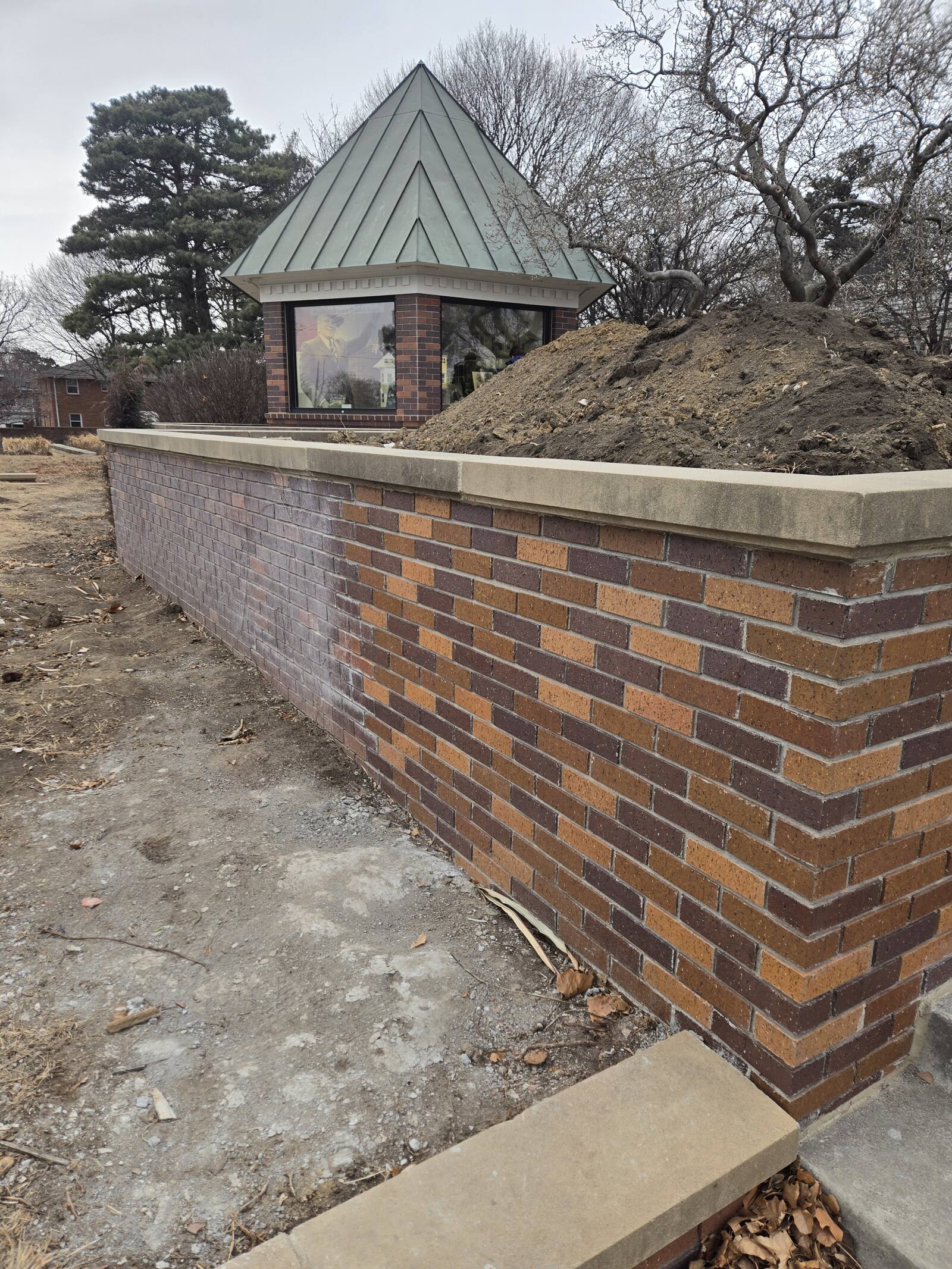
A retaining wall in Bennington usually needs repair when it leans, bulges, cracks along the joints, or shows water pooling at its base. Leaning is the most urgent sign, because it means soil pressure is winning. Most of the time the cause is water and clay soil behind the wall, not the stone or block itself, so fixing only the face rarely holds.
Why Retaining Walls in Bennington Struggle
Bennington sits in the same part of eastern Nebraska as the rest of the Omaha area, and the ground here is heavy clay. Clay holds water. When it gets wet it swells and pushes sideways on anything holding it back. When it dries out it shrinks and pulls away, leaving gaps where more water can pour in during the next storm.
Then winter adds freeze-thaw cycles. Water trapped behind a wall freezes, expands, and pushes harder than the wall was ever meant to resist. By spring the wall has moved a little. Do that for a few winters and a straight wall turns into a leaning one. We covered the soil side of this in more depth in our post on why walls lean in clay soil.
Newer subdivisions add another wrinkle. Fill that was not compacted well settles over the first several years, and a wall built on or against it settles with it.
Warning Signs to Check This Fall
Fall is a good time to walk your walls, before the ground freezes. Look for these:
- A lean or forward tilt. Hold a level against the face or sight down the top edge. A wall that was plumb when built should still be plumb.
- A belly or bulge. A section that pushes outward in the middle means pressure is building behind it.
- Stair-step cracks. Cracks that follow the mortar joints or run diagonally across block usually point to movement, not just age.
- Open or missing mortar. Water gets in through failed joints and speeds everything else up.
- White staining. Mineral residue on the face means water is moving through the wall.
- Pooling water or soft ground at the base. If the drainage is not working, the wall is carrying a load of wet soil.
- Gaps behind the wall or sinking soil above it. The backfill is moving, and so is whatever sits on it.
One crack alone is not an emergency. A crack plus a lean, or a bulge that grows from one season to the next, is.
Repair or Rebuild? How to Tell
The honest answer depends on what is behind the wall. A wall that has only lost some mortar, or has a few loose caps, is a repair job. A wall that is leaning because the soil behind it is saturated and has nowhere to drain is a different problem. If we only patch the face, the same pressure keeps pushing and the patch fails.
In general, the wall can usually stay when:
- The lean is slight and has not changed over a full year.
- Damage is limited to joints, caps, or a few individual units.
- Water can be redirected away from the wall.
A rebuild is more likely when:
- The wall is visibly out of plumb or bulging.
- Whole sections have shifted or fallen.
- There is no drainage behind the wall at all.
- The base has settled unevenly.
We lay out the same decision for another part of town in our post on repairing or rebuilding a wall in La Vista. The logic carries over to Bennington.
Drainage Is Most of the Fix
If we could change one thing about the walls we see, it would be drainage. A retaining wall is built to hold soil, but it is not built to hold soil that is full of water. Water adds weight, and in clay it adds swelling pressure on top of that.
A well built wall gives water a way out. That usually means free draining gravel behind the wall, a way to carry water away at the bottom, and ground above the wall that slopes away from it instead of toward it. When a wall fails, the first thing we look at is where the water was supposed to go.
You can help right now. Make sure downspouts do not dump next to the wall, clear any weep holes or drains of dirt and leaves, and keep sprinklers from soaking the soil above it.
Height Matters, and So Does the Rulebook
Tall walls carry far more load than short ones, and local rules treat them differently. Bennington's own zoning regulations define a fence to include retaining walls over four feet in height.
What that means for your wall depends on its height, where it sits on the lot, and what it supports. Before you rebuild or add a wall, check with the City of Bennington and with the county permit office for your address. A good contractor will ask the same questions before starting.
What a Proper Repair Looks Like
We start by looking at the wall and the ground around it, not just the damaged spot. Where is the water coming from? Has the wall moved, and is it still moving? Is the footing solid?
From there the work follows the problem. Sometimes that is repointing joints and resetting loose caps. Other times it means taking down the failed section, fixing the base and drainage, and rebuilding it properly. We are owner operated, and Jesse has decades of hands-on masonry experience, so the person who looks at your wall is the person who knows how to fix it.
If you are comparing contractors, ask each one what they plan to do about drainage. A bid that does not mention it is a bid that will probably be repeated in a few years. You can read more about our work on our retaining walls page, or see how we serve the area on our Bennington service area page.
Frequently Asked Questions
How do I know if my retaining wall is leaning too much?
Hold a level against the face or sight along the top edge. If the wall tilts forward, or leans more than it did a year ago, treat it as a problem. A lean that keeps growing means the soil behind it is still pushing, and it should be looked at before winter.
Can a leaning retaining wall be pushed back into place?
Rarely. Once a wall has leaned, the joints and base have usually shifted too, and the force that moved it is still there. Most leaning walls need to be taken down and rebuilt with proper drainage behind them. Pushing it back without fixing the cause just delays the same failure.
Why does my wall crack in winter?
Water behind the wall freezes and expands, then thaws and drains or settles, again and again. In clay soil the pressure is greater because clay holds so much water. Over several winters, those cycles open cracks, loosen mortar, and slowly push the wall out of line.
Do weep holes and drainage really matter?
Yes, they matter more than almost anything else. A wall that cannot release water has to hold the full weight of wet soil, and in clay that includes swelling pressure. Keeping drains and weep holes clear is the easiest maintenance you can do.
Do I need a permit to repair or rebuild a retaining wall in Bennington?
It depends on the height of the wall, where it sits, and what it supports. Bennington's zoning rules treat retaining walls over four feet as fences. Check with the City of Bennington and the county permit office for your address before work begins.
Get Your Wall Looked At Before the Ground Freezes
If your retaining wall in Bennington is leaning, cracking, or holding water, we can take a look and tell you plainly whether it needs a repair or a rebuild. Contact Omaha Masonry to set up a visit, or call us at 402-704-4894.